Last updated: 1 August 2026
Quick answer
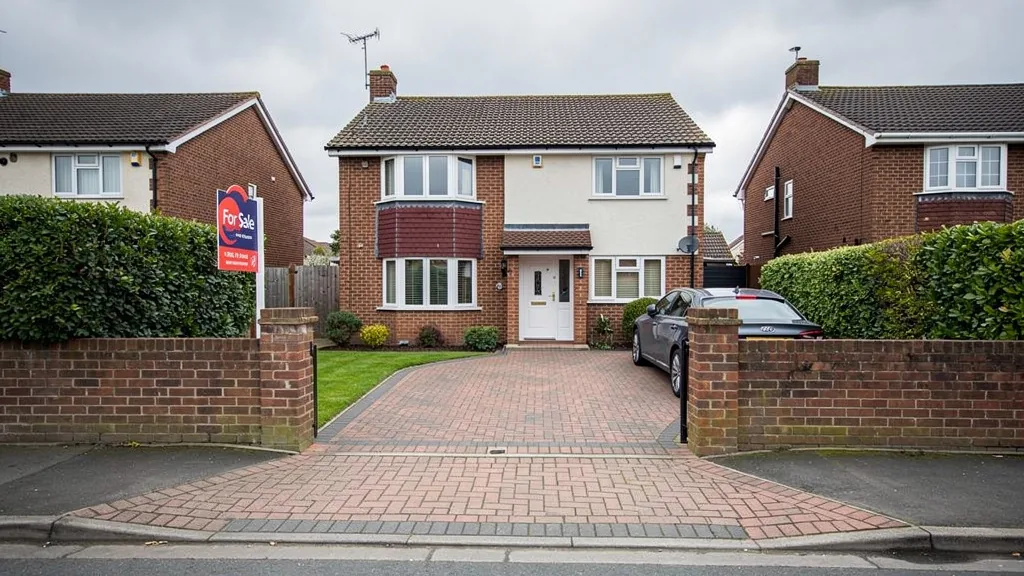
No driveway surface reliably adds a set percentage to a house price, and any page telling you otherwise is quoting a figure it cannot source. What moves a UK valuation is creating off-street parking where there was none. After that, condition and appropriateness do the work: a well-kept drive in a surface that suits the house helps it sell, and a tired one costs you at the negotiating stage.
Key takeaways
- Creating parking where there was none is the change that shifts a valuation
- Replacing a working driveway helps a sale rather than the price
- The quoted value percentages trace back to agency marketing, not research
- Condition and fit beat material every time
- EV ducting is cheap now and expensive later
Why the percentages you have read are not research
Search this question and you will be told a driveway adds five per cent, or ten, or twenty in London. Follow those numbers back and they do not lead anywhere. They come from estate agency blog posts, vehicle leasing indices, and other driveway companies quoting each other. There is no UK study of comparable sales isolating a driveway as a variable, because that is a hard thing to isolate.
We would rather say that plainly than repeat a number we cannot stand behind. What follows is what surveyors, agents, and our own customers actually behave as though is true.
What genuinely moves a valuation
Creating off-street parking where there was none
This is the one real step change. A house with nowhere to park and a house with a driveway are different products, not the same product presented better. In streets with parking pressure it also affects how quickly a house sells and how much room a buyer has to negotiate. Energy Systems Catapult put the share of UK households with no access to off-street parking at around 30 per cent in its 2021 work on electric vehicle adoption, so this is not a niche situation.
It needs a dropped kerb, which is a separate council application from the driveway itself and has its own lead time. Start it early.
Condition, and what a tired frontage signals
A cracked, sunken, weed-run drive does not just look poor. It tells a buyer that maintenance has been deferred, and buyers extrapolate. The survey will find whatever else has been deferred, and the driveway primed them to look. This is where replacing a working-but-tired drive earns its money: not as a price uplift you can point at, but as one fewer reason to knock you down.
Appropriateness to the house
A surface that fights the property subtracts, however expensive it was. Bright multi-tone paving on a Georgian frontage in Bath reads as a mistake to exactly the buyer paying most for the house. Gravel or a natural aggregate reads as correct. That judgement costs nothing and matters more than the budget.
If you are choosing a surface anyway
Take the design and the condition as given, then pick on what suits the house and how you want to spend your weekends.
- Block paving: presents conservatively and repairs one unit at a time. The safe choice on a suburban frontage.
- Resin-bound: seamless, permeable, and colour-matched to your brick or stone. Reads as the newest and needs the least of you.
- Tarmac: the most drive per pound, and the right answer on length and gradient. A block paved border lifts it considerably.
- Gravel: period-correct, naturally permeable, and the cheapest way to cover a large area well.
Our driveway material guide compares all four on cost, lifespan, and upkeep, and the driveway design ideas guide covers the detailing that changes how any of them reads.
What a valuer is actually looking at
A surveyor valuing a house is not scoring your aggregate blend. They are noting whether the property has off-street parking, how many cars it takes, whether access is shared, and whether anything about the frontage suggests a problem: standing water, subsidence at the boundary, a surface bridging the damp proof course, or drainage running towards the building.
Two of those are worth dwelling on, because homeowners rarely think of them as valuation issues. A drive laid higher than the damp proof course is a defect a surveyor will write up, and it is entirely a build decision. So is water pooling against a wall. Both are cheap to get right at the outset and expensive to argue about at survey stage.
Cost against return, honestly
If you are replacing a driveway purely as an investment, the arithmetic rarely works on its own. You are unlikely to recover the full cost as a line on the asking price. What you tend to get instead is a faster sale, a stronger position when a buyer starts listing things they want money off for, and a house that photographs well enough to get viewings in the first place.
If you are creating parking that did not exist, the case is different and much stronger, because you have changed what the property is rather than how it presents. And if you are staying put for a decade, the value question is close to irrelevant next to whether you enjoy arriving home.
What this looks like around Bristol and Bath
Parking pressure is the variable that decides how much any of this matters, and it is intensely local. On the Victorian terraced streets of Bristol, off-street parking is scarce enough that creating it changes the buyer pool. Around Bath, where a great deal of stock sits in conservation areas, the constraint flips: the question is less whether you can park and more whether the surface is acceptable against the stone and to the planners.
On the newer estates at Portishead and Weston-super-Mare almost everything already has a drive, so nothing is gained by having one. There, condition and kerb appeal are the whole game, and a tired original builder-grade surface is one of the easiest things to put right before listing.
What actively costs you
- Parking that does not fit a real car once a wheelie bin is out
- A drive that sheds water at the house rather than away from it
- Losing the entire front garden to hard surfacing on a period street
- A surface laid over a base that was never rebuilt, which will show within two winters
- No EV provision on a house priced for a family buying their next car
Timing it around a sale
If a sale is the reason, do the work before the photographs rather than after the first viewing. A frontage is the first image on every portal listing and the first thing anyone sees arriving. Allow curing time in the plan: tarmac takes traffic quickly, resin wants a day or two before cars, and block paving is usable as soon as it is jointed.
If the drive is sound and only looks tired, get it cleaned and re-sanded before you commit to replacing it. On block paving in particular the difference is startling and costs a fraction. Our guide to cleaning and pressure washing covers doing that without damaging the surface.
The EV question
Charging at home is the cheapest way to run an electric car, and a driveway is what makes it possible. That is quietly becoming part of what a driveway is worth. The practical point is timing: while the ground is open, running cable and ducting to where a charger would go costs very little. Retrofitting means cutting a finished surface and making it good again.
Decide at survey stage even if you fit the charger years later. Our guide to EV charging and driveways covers the detail.
Your questions
Does a driveway add value to a house?
Creating off-street parking where there was none usually does, because it changes what the property offers rather than how it looks. Replacing a driveway that already works is a different proposition: it helps the house sell and it helps it photograph, but it is not the same lever.
Which driveway surface is worth the most at resale?
None of them, on their own. A buyer is not paying for resin over tarmac. They are paying for a frontage that looks maintained and a space they can park in. Choose the surface that suits the house and your budget, then spend the difference on doing it properly.
Is block paving or resin better for value?
Both present well. Block paving reads as the safer, more traditional choice and is repairable one unit at a time. Resin reads as newer and needs no annual re-sanding. On a period frontage the aggregate can be matched to the stone, which is where resin pulls ahead.
Does a dropped kerb add value?
It is the enabling step, so on a house with no existing access it matters more than the surface does. Without one you have a hard standing, not a driveway. It is applied for separately through your council and runs on its own timescale.
Will an EV charging point add value?
It is becoming an expectation rather than a bonus, particularly on houses aimed at families. The cheap moment to deal with it is while the drive is open. Running ducting now costs very little; cutting a finished drive later does not.
Does a gravel driveway devalue a house?
No, and on a period or rural property it is often the most appropriate surface. What devalues a frontage is gravel done badly: no edging, stone across the pavement, and ruts where the wheels sit.
Getting it right first time
We design and install driveways across Bristol, Bath, and the surrounding Somerset towns, from our base in Paulton. If you are weighing up whether to replace a drive before selling, we will tell you honestly whether it is worth doing. Book a free survey and you will get a layout, a fixed written quote, and a straight answer.

Your Premium Driveway & Paving Specialists
Quality Meets Kerb Appeal.
Not just our tagline...it’s our promise.
- No obligation
- Transparent pricing
- Local references available