Skip to content
 Last updated: April 15, 2026
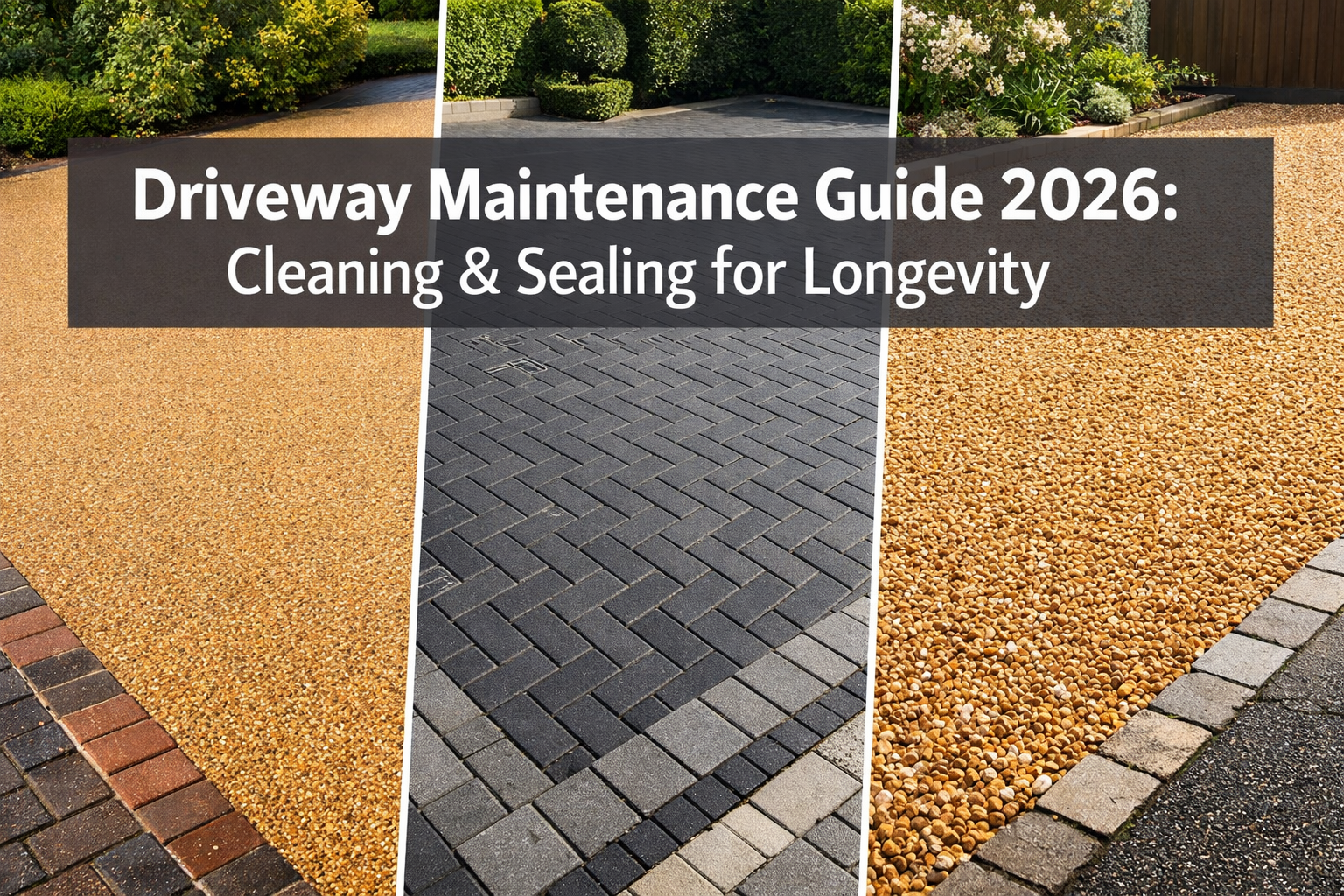
Quick answer: A well-maintained driveway can last 10 years or more, but only if you clean it regularly, address problems early, and apply the right sealant at the right time. This maintenance guide covers cleaning and sealing resin, block paving, and gravel driveways for longevity, with step-by-step routines for each surface type.
Key takeaways
- 🧹 Sweep all driveway surfaces every one to two weeks to prevent debris build-up
- 💧 Use a pressure washer at minimum 150 bar with a fan lance, held at least 20cm from the surface [2]
- 🚫 Never use rock salt, bleach, or oil-based solvents on resin-bound surfaces [1]
- 🌿 Re-brush kiln-dried sand into block paving joints regularly to suppress weeds
- 🔒 Consider a polyurethane UV resin sealer refresh every two to four years to restore colour and protection [3]
- ❄️ Use grit or sharp sand instead of chemical de-icers on resin driveways in winter [1]
- ⏱️ Block paving typically shows major issues around the six-year mark without proper care [5]
- 🛢️ Clean oil spills immediately with warm water and washing-up liquid to prevent staining [1]
- 📅 Gravel driveways need topping up and weed membrane checks at least once a year
- 🔗 Each surface type has different maintenance needs; using the wrong products causes lasting damage
Why driveway maintenance matters more than most homeowners realise
Your driveway is one of the first things anyone notices about your home. It’s also one of the hardest-working surfaces on your property, taking daily punishment from vehicles, weather, and foot traffic.
Neglect it, and you’re not just looking at a tired-looking forecourt. You’re looking at cracked blocks, weed-infested joints, faded resin, and costly repairs that could have been avoided entirely.
The good news? A consistent routine takes less effort than most people expect.
Tony Flook, Managing Director: “We’ve been working on driveways for over 25 years, and the pattern is always the same. The homeowners who invest a little time in routine maintenance protect thousands of pounds of value. The ones who don’t end up calling us for a full replacement far sooner than they should.”
Whether you’ve just had a new installation or you’re trying to extend the life of an existing surface, this guide gives you a practical, no-nonsense routine for every driveway type.
How to clean and maintain a resin-bound driveway
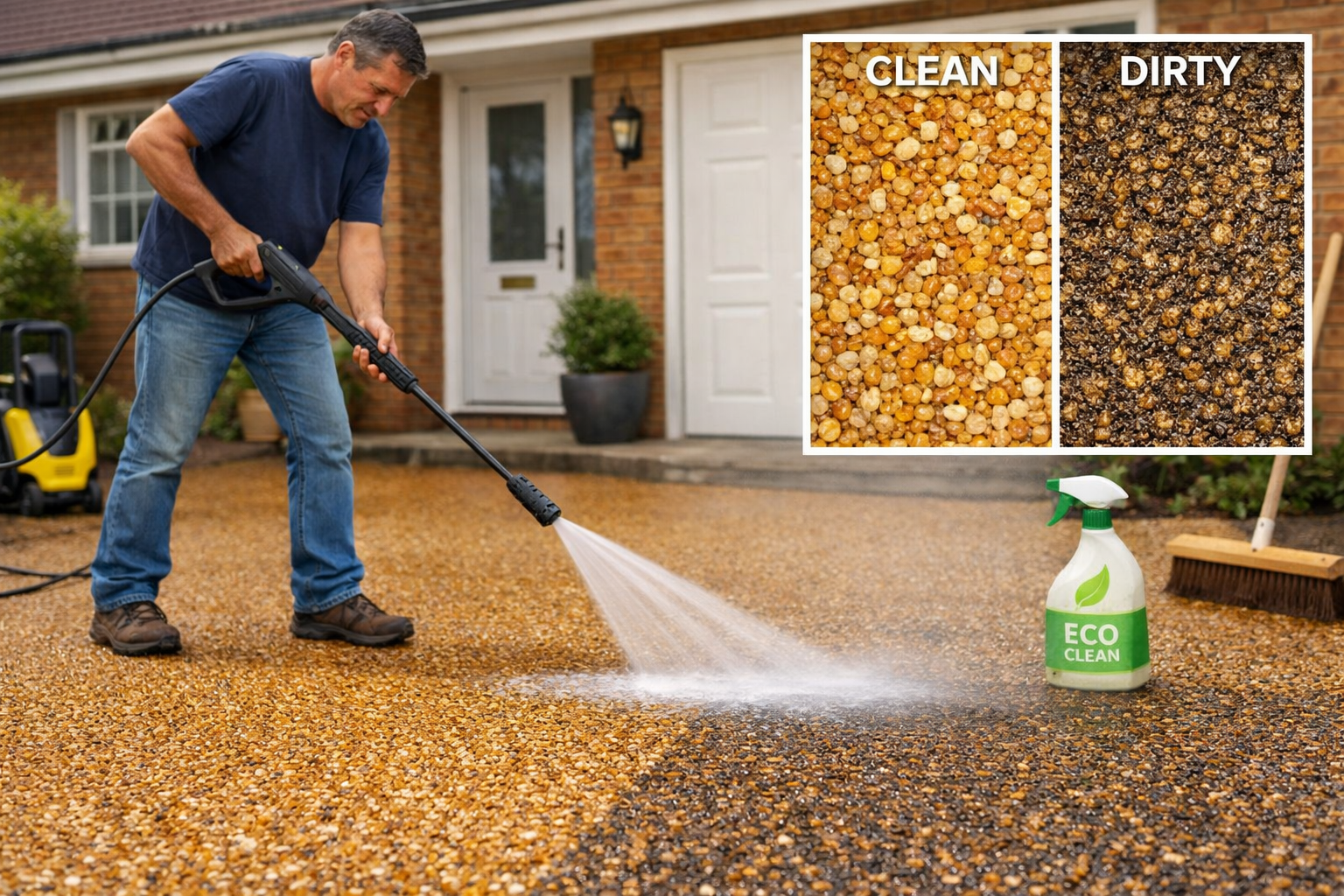
Resin-bound driveways are low maintenance compared to other surfaces, but “low maintenance” doesn’t mean “no maintenance.” With the right routine, a resin-bound surface can last well over 10 years [5].
Weekly and fortnightly tasks:
- 🧹 Sweep with a stiff broom every one to two weeks to remove leaves, grit, and debris
- 🌊 Rinse with a garden hose or gentle pressure wash to shift embedded dirt
- 🛢️ Tackle oil or fuel spills immediately with warm water and washing-up liquid [1]
Pressure washing resin: the rules that matter
This is where most people go wrong. Too much pressure, too close, and you’ll damage the aggregate surface.
Follow these specifications every time [2][6]:
Setting | Requirement |
|---|---|
Minimum bar rating | 150 bar |
Lance type | Fan-type only |
Distance from surface | Minimum 20cm |
Nozzle angle | Low, sweeping passes |
Never use a pencil jet or rotary nozzle. And always work in the same direction to avoid patchy results.
What to avoid completely:
- ❌ Bleach or harsh chemical cleaners
- ❌ Petrol or oil-based solvents
- ❌ Rock salt or chemical de-icers in winter [1]
- ❌ Any solvent exposure within the first seven days of installation [6]
For winter, grit or sharp sand is your safest option for grip. It won’t damage the resin or the sub-base beneath it.
When to reseal a resin driveway:
After two to four years, consider applying a polyurethane UV resin sealer following a deep clean. This restores colour, adds UV protection, and extends surface life significantly [3]. It’s a straightforward job for a professional, and far cheaper than a full replacement.
For more on caring for your resin surface, see our resin-bound driveway advice hub.
Ben Sperring, Surfacing Manager: “The biggest mistake I see with resin driveways is using the wrong pressure washer settings. People hire a machine, crank it up, and blast the surface from six inches away. You can dislodge aggregate that way. Keep your distance, use a fan lance, and you’ll be fine.”
How to clean and seal block paving driveways
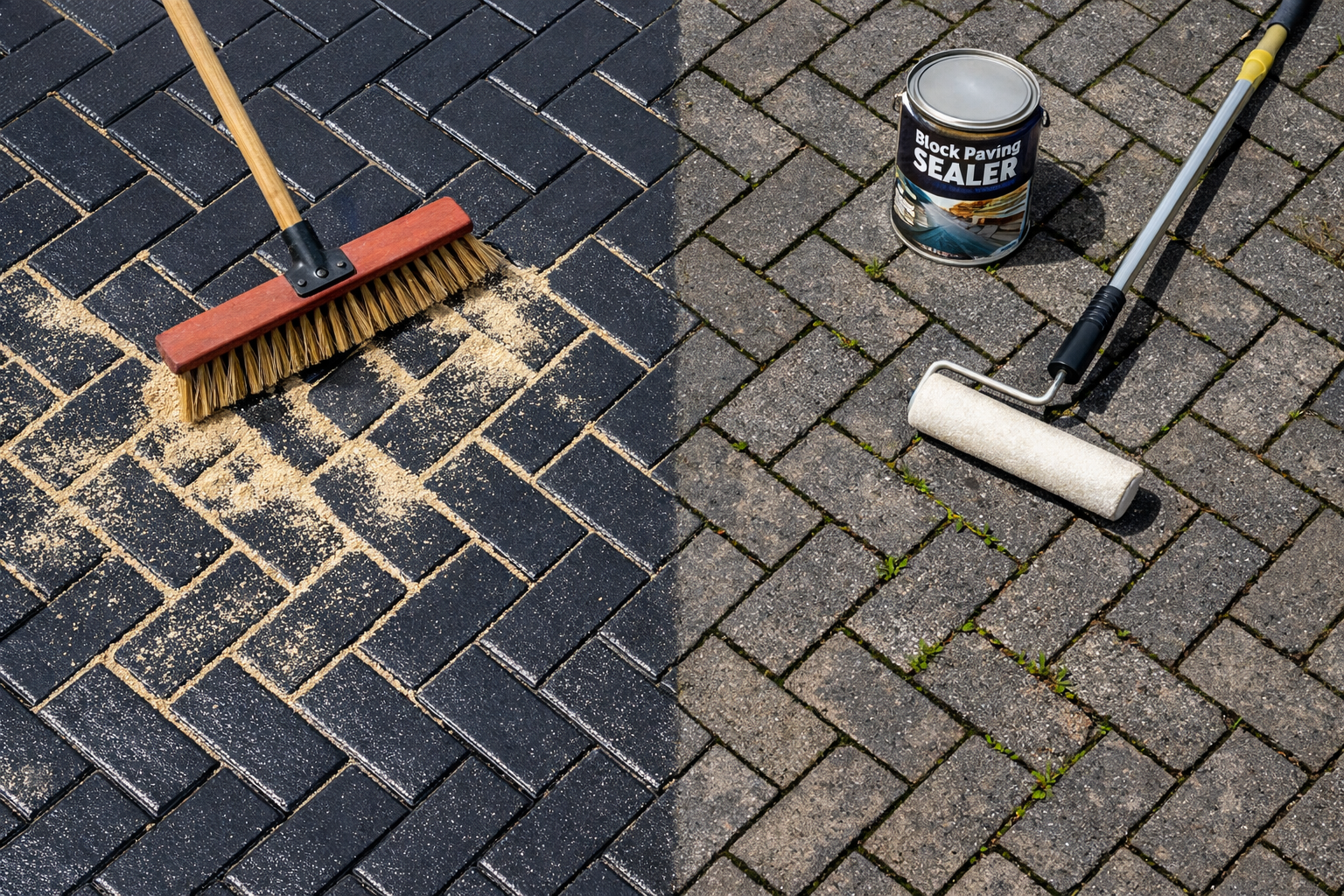
Block paving is one of the most popular driveway surfaces in the UK, but it’s also one of the most maintenance-intensive [5]. Done right, it’s a surface that can look immaculate for a decade or more. Left to its own devices, weeds, staining, and sunken blocks become a real headache.
The joint is everything.
The spaces between your blocks are the most vulnerable part of the entire surface. Weed seeds settle there, moisture works its way in, and once the jointing sand washes out, you’ve got movement and cracking.
Re-brush kiln-dried jointing sand into the joints at least once a year, and after any pressure washing session. This is the single most effective thing you can do for block paving longevity [5].
Step-by-step block paving cleaning routine:
- 🧹 Sweep the surface thoroughly to remove loose debris
- 💧 Apply a pH-neutral block paving cleaner and allow it to dwell for the recommended time
- 🔫 Pressure wash at 150 bar minimum, using a fan lance, working in consistent passes
- 🌿 Treat any visible weeds with an appropriate weed killer
- 🏖️ Once dry, brush kiln-dried sand across the surface, working it firmly into all joints
- 🔒 Apply a block paving sealer to lock in the sand and protect against staining
Sealing block paving: when and how often?
Seal every two to three years as a general rule. A good quality impregnating sealer will protect against oil stains, moss growth, and colour fade. It also helps the jointing sand stay in place for longer.
If you’re seeing significant weed growth or block movement, check out our guide to common driveway problems and how to fix them before sealing over the issue.
For design inspiration and material options, our block paving driveway advice section covers everything from herringbone patterns to edging choices.
Mike Clancy, Non-Executive Director: “In 30 years in this industry, I’ve seen block paving driveways that look brand new at 15 years old, and others that are falling apart at five. The difference is almost always maintenance. Specifically, whether the joints have been looked after.”
How to maintain a gravel driveway for long-term performance

Gravel driveways are often chosen for their natural look, permeability, and relatively low installation cost. They’re also one of the easiest surfaces to maintain, as long as you stay on top of a few key tasks.
Annual maintenance checklist:
- 🪨 Top up gravel as needed; most driveways lose depth over time through displacement and compaction
- 🌿 Check and replace the weed membrane if weeds are breaking through in multiple areas
- 🚜 Rake the surface regularly to redistribute gravel and prevent ruts forming under tyre tracks
- 🍂 Remove leaves and organic debris promptly; they decompose and feed weed growth
- 🔲 Inspect edging borders and containment strips; replace any that have shifted or cracked
Weed control: the practical approach
A quality weed membrane beneath the gravel is your first line of defence. But membranes degrade over time, especially in high-traffic areas.
For surface weeds, a path-and-patio weed killer applied in early spring and again in autumn works well. Eco-friendly options using acetic acid (horticultural vinegar) are increasingly popular and avoid harsh chemicals near planted borders.
How much gravel do you need to top up?
A depth of 50mm is the standard for a functional gravel driveway. If your surface has dropped below 30mm in places, it’s time to top up. Most homeowners need a partial top-up every two to three years.
For help choosing the right aggregate, our gravel driveway options guide covers the most popular choices for UK homes.
What’s the best eco-friendly cleaner for each driveway type?
Sustainability matters more than ever in 2026, and the good news is that eco-friendly cleaning products have caught up with their chemical counterparts. Here’s a quick comparison:
Driveway type | Eco-friendly cleaner option | Avoid |
|---|---|---|
Resin-bound | pH-neutral biodegradable cleaner, mild soapy water | Bleach, solvents, acidic cleaners |
Block paving | Diluted white vinegar (for moss), plant-based patio cleaner | Bleach on coloured blocks |
Gravel | Horticultural acetic acid for weeds | Glyphosate near planted areas |
Always rinse thoroughly after applying any cleaner to prevent residue build-up. And check product labels for SUDS compliance if your driveway drains to a soakaway; our SUDS compliant driveway guide explains the regulations clearly.
Seasonal maintenance: what to do and when
A year-round routine doesn’t need to be complicated. Here’s a simple seasonal breakdown:
🌱 Spring
- Deep clean all surfaces after winter
- Treat moss and weeds early before they establish
- Re-sand block paving joints
- Check gravel depth and top up if needed
☀️ Summer
- Fortnightly sweeping and spot cleaning
- Check resin surface for any UV discolouration
- Inspect block paving for sunken or raised blocks
🍂 Autumn
- Remove fallen leaves promptly; wet leaves cause staining and slip hazards
- Apply weed killer to gravel and block paving before winter
- Consider sealing block paving before temperatures drop
❄️ Winter
- Use grit or sharp sand for grip on resin surfaces; never rock salt [1]
- Avoid heavy pressure washing in freezing conditions
- Clear standing water from block paving to prevent freeze-thaw damage
For a full seasonal checklist specific to resin surfaces, sources like the CG Paving seasonal guide [7] provide useful reference points.
How do I remove oil stains from my driveway?
Oil stains are one of the most common driveway problems, and one of the most satisfying to fix when you act quickly.
For resin-bound surfaces: Apply warm water and washing-up liquid immediately. Blot, don’t scrub. For older stains, a specialist resin-safe degreaser works well [1].
For block paving: A dedicated block paving degreaser or a paste of baking soda and washing-up liquid left to dwell for 20 minutes before scrubbing is effective for fresh stains. Older stains may need a professional-grade product.
For gravel: Remove contaminated gravel, replace with fresh aggregate. It’s the simplest fix.
Our full guide to removing oil stains from your driveway covers every surface type in detail.
FAQs: Maintenance guide for resin, block paving and gravel driveways
How often should I pressure wash a resin-bound driveway? Once or twice a year is sufficient for most resin driveways, combined with regular sweeping. Always use a fan lance at minimum 150 bar, held at least 20cm from the surface to avoid dislodging aggregate [2][6].
Can I use a standard patio cleaner on block paving? Most pH-neutral patio cleaners are safe for block paving. Avoid bleach-based products on coloured blocks as they can cause fading. Always test a small inconspicuous area first [4].
How long does a resin-bound driveway last with proper maintenance? With regular cleaning and a sealer refresh every two to four years, a resin-bound driveway can easily last 10 years or more [5][3]. The sub-base quality at installation also plays a major role in long-term performance.
Do I need to seal a gravel driveway? No, gravel driveways don’t require sealing. The priority is maintaining the weed membrane, keeping gravel depth above 50mm, and using edging to prevent spread. Annual raking and periodic top-ups are the main tasks.
Why do weeds keep growing through my block paving? Weeds establish in block paving joints when the kiln-dried sand has washed out or degraded. Re-sanding joints annually and applying a jointing compound or sealer significantly reduces weed growth [5][4].
Is it worth sealing a new block paving driveway straight away? Wait at least three to six months before sealing new block paving. This allows the blocks to settle and any efflorescence (white salt deposits) to work its way out naturally. Sealing too early can trap efflorescence beneath the surface.
Conclusion: protect your investment with a consistent routine
A driveway is a significant investment, and this maintenance guide for cleaning and sealing resin, block paving, and gravel driveways for longevity exists for one reason: to help you protect it.
The routines aren’t complicated. Sweep regularly. Use the right products. Reseal on schedule. Address problems before they escalate.
Your action plan for 2026:
- ✅ Schedule a spring deep clean for your driveway surface this month
- ✅ Check your block paving joints and top up kiln-dried sand if needed
- ✅ Assess whether your resin surface is due a sealer refresh
- ✅ Check gravel depth and weed membrane condition
- ✅ Switch to eco-friendly, pH-neutral cleaners if you haven’t already
If you’re noticing significant damage, persistent weeds, or surface deterioration that cleaning alone won’t fix, it may be time for a professional assessment. You can get a free driveway quote from our team, or explore our driveway material guides if you’re considering a new installation.
Your driveway works hard every day. A little regular care goes a long way.
References
[1] How To Maintain A Resin Driveway Plymouth Homeowners Guide – https://stonecrosspavingltd.com/how-to-maintain-a-resin-driveway-plymouth-homeowners-guide/
[2] Resin Bound Driveway Maintenance Guide – https://www.yewtreelandscapes.com/post/resin-bound-driveway-maintenance-guide
[3] How To Clean And Maintain Your Resin Bound Surface The Complete Aftercare Guide – https://www.vubasurfaces.co.uk/blogs/technical-bulletins/how-to-clean-and-maintain-your-resin-bound-surface-the-complete-aftercare-guide
[4] Your Guide To Block Paving Driveway Maintenance – https://jointit.com/blog/your-guide-to-block-paving-driveway-maintenance/
[5] Ultimate Guide To Driveway Maintenance – https://lakesidesurfacing.com/ultimate-guide-to-driveway-maintenance/
[6] Resin Bound Maintenance Guide – https://resinbondedaggregates.com/blog/resin-bound-maintenance-guide
[7] Seasonal Maintenance Checklist For Resin Bound Surfaces – https://www.cgpavingcompany.co.uk/seasonal-maintenance-checklist-for-resin-bound-surfaces/
[8] Maintaining And Caring For Resin Bound Surfaces Your Complete Guide – https://www.ronadeck.co.uk/post/maintaining-and-caring-for-resin-bound-surfaces-your-complete-guide