Last updated: 1 August 2026
Quick answer
Different driveway materials need very different cleaning approaches. Resin-bound surfaces tolerate moderate pressure (around 1,500 PSI) with a 25-40° fan nozzle held 30cm away. Tarmac needs even gentler treatment, while block paving handles more pressure if you re-sand the joints afterwards. Gravel? Don’t pressure wash it at all – rake, weed and top up instead. Get the PSI, angle and distance wrong and you’ll strip binder, blast out jointing sand or shred your warranty.

Key takeaways
- 🧊 Resin-bound driveways: max 1,500 PSI, 25-40° nozzle, 30cm distance, no harsh chemicals
- 🛣️ Tarmac: low to medium pressure only, wide fan, 20-30cm minimum distance
- 🧱 Block paving: 45° angle, ~200mm distance, then re-sand joints with kiln-dried sand
- 🪨 Gravel: never pressure wash; rake, weed and replenish stones instead
- 🧪 Pre-treat oil, moss and algae before you reach for the lance
- 💷 Professional driveway cleaning in the UK typically runs £2-£5 per m² in 2026
- 🚫 Never mix bleach with detergents in a pressure washer – it’s dangerous and damages surfaces
- 📅 Clean resin and block paving annually; tarmac every 2-3 years; gravel as needed
What’s the difference between pressure washing and soft washing a driveway?
Pressure washing uses high-velocity water (typically 1,500-3,000 PSI) to physically blast dirt off a surface. Soft washing uses low pressure (under 500 PSI) combined with biocidal cleaners to kill moss, algae and lichen at the root, then rinses residue away.
For most UK driveways, a hybrid approach wins. Soft wash first to kill biological growth, let the chemicals do the heavy lifting, then follow with controlled pressure washing to lift loosened grime. This protects your surface and gives a longer-lasting clean.
“The biggest mistake homeowners make is reaching straight for the highest pressure setting. On a resin or tarmac drive, you’re not cleaning – you’re slowly destroying the surface you paid thousands for.” – Ben Sperring, Surfacing Manager, Driveways Plus
Choose soft washing if your driveway is mostly green with moss or black with algae. Choose pressure washing if it’s grease, mud or general traffic dirt.
Can you pressure wash resin driveways without damaging them?
Yes, but only with the right settings. Resin-bound driveways can be pressure washed safely using moderate pressure (around 1,200-1,500 PSI) with a wide fan spray, keeping the nozzle 30cm from the surface and moving in steady, overlapping passes.
The danger zone? Anything above 2,000 PSI, a narrow turbo nozzle, or holding the lance too close. These will dislodge aggregate, weaken the UV-stable resin bond and create patchy bald spots that are expensive to repair.
🛡️ Safe resin cleaning checklist
- 💧 Pressure: 1,200-1,500 PSI maximum
- 🌀 Nozzle: 25° or 40° fan tip (never the red zero-degree tip)
- 📏 Distance: minimum 30cm from surface
- 🧴 Detergent: pH-neutral driveway cleaner only
- 🚷 Avoid: bleach, strong solvents, wire brushes
For more on protecting this premium surface, see our resin-bound driveway advice hub.
Why is my resin driveway getting damaged after cleaning?
Three culprits cause most resin damage: excessive PSI, narrow nozzles held too close, and harsh chemicals breaking the resin-aggregate bond. If you’re seeing loose stones, milky patches or sticky residue after cleaning, one of these is to blame.
Resin systems use UV-stable polyurethane to glue decorative aggregate together. That bond is tough, but it’s not bulletproof. Bleach, strong degreasers and petrol-based solvents all attack the polymer over time. So does relentless high-pressure water.
The fix? Switch to manufacturer-approved cleaners, drop your PSI, and widen your nozzle. If aggregate has already come loose, a professional repair kit can restore small patches without redoing the whole drive.
What’s the best way to clean a tarmac driveway without it breaking up?
Use a wide fan nozzle on low to medium pressure (around 1,500-2,000 PSI), keeping the lance at least 20-30cm from the surface and moving in smooth, overlapping passes. Tarmac is held together by bitumen binder, and that binder softens with heat and erodes with high-pressure jets.

Avoid these tarmac killers:
- 🔥 Hot water above 60°C – it melts the bitumen
- ⚡ Zero-degree (red) turbo nozzles – they cut grooves
- 🧪 Petrol, diesel or paint thinners – they dissolve the binder
- 🕐 Lingering in one spot – causes pitting and stripped patches
Pre-treat oil stains with a dedicated tarmac-safe degreaser before washing. For deeper restoration, consider a sealant after cleaning – our tarmac resurfacing and sealants guide covers this in detail.
How do you safely clean block paving without loosening the joints?
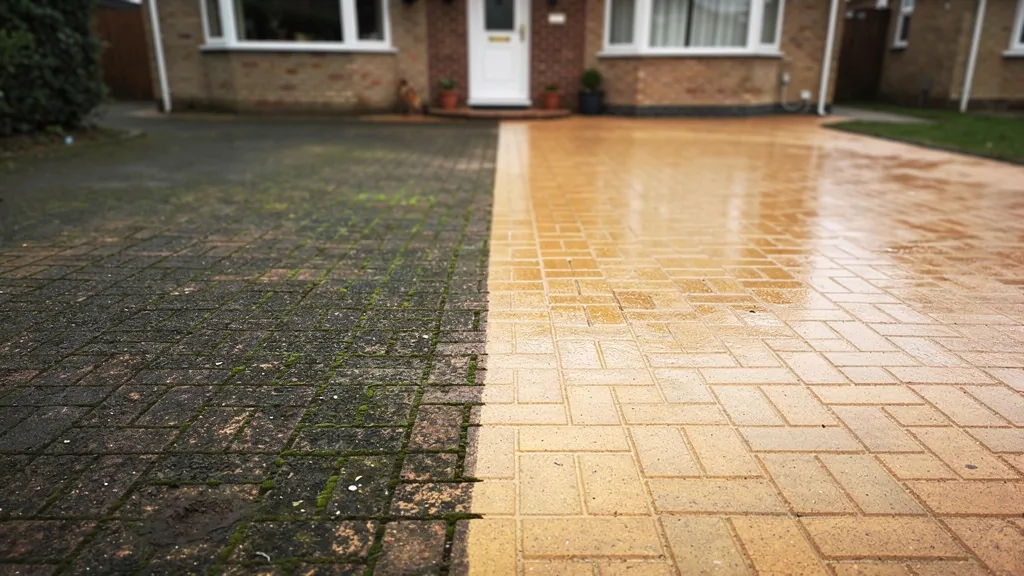
Hold the lance at a 45-degree angle and maintain a distance of about 200mm (8 inches) from the surface. This technique lifts dirt from the block faces without firing water straight down into the kiln-dried sand joints. Then – and this is critical – re-sand the joints once everything’s dry.
🧱 Block paving cleaning steps
- 🌿 Pull any visible weeds and treat with a path-safe weedkiller
- 🦠 Apply a biocide for moss and algae; leave 24 hours
- 💧 Pressure wash at 45° angle, 200mm distance, 2,000-2,500 PSI
- ☀️ Let the surface dry completely (24-48 hours)
- 🏖️ Brush in fresh kiln-dried jointing sand
- 🧹 Sweep off excess and consider a block paving sealer
Skip step 5 and you’ll get sunken joints, wobbling blocks and weeds returning within months. For installation and design inspiration, browse our block paving driveways gallery.
What PSI is safe for gravel driveways?
None. Pressure washing a gravel driveway is a bad idea full stop. The water jet will scatter your stones, expose the sub-base, blast out fines and create ruts you’ll spend a weekend repairing.
Instead, maintain gravel driveways by:
- 🪚 Raking regularly to redistribute stones and break up compaction
- 🌱 Hand-weeding or spot-treating with a glyphosate-free weedkiller
- ➕ Topping up with matching aggregate every 1-2 years
- 🔲 Installing a hidden grid system to lock stones in place
If you’re tired of constantly raking, our gravel driveways with hidden grids guide explains how to upgrade without losing the natural look.
Can I use a pressure washer on all driveway types?
No. Loose-aggregate surfaces like gravel and self-binding gravel should never be pressure washed. Resin-bound, tarmac, block paving and concrete can all handle pressure washing, but each needs different PSI, nozzle and technique settings.
Driveway pressure washing comparison
Material |
Safe PSI |
Nozzle |
Distance |
After-care |
|---|---|---|---|---|
Resin-bound |
1,200-1,500 |
40° fan |
30cm |
Light sealer if faded |
Tarmac |
1,500-2,000 |
25-40° fan |
20-30cm |
Optional sealant |
Block paving |
2,000-2,500 |
25° fan, 45° angle |
20cm |
Re-sand joints |
Concrete |
2,000-2,500 |
25° fan |
20-25cm |
Optional sealer |
Gravel |
Do not use |
N/A |
N/A |
Rake & top up |
How much does professional driveway cleaning cost in 2026?
Professional driveway cleaning in the UK typically costs £2-£5 per square metre in 2026, with most domestic jobs landing between £150 and £450. Block paving sits at the higher end because of the re-sanding work; tarmac is usually cheapest.
Pricing depends on:
- 📐 Driveway size and shape (awkward layouts cost more)
- 🌿 Level of moss, algae and staining
- 🧴 Whether sealing or re-sanding is included
- 📍 Your region (London and the South East trend higher)
“A good professional clean isn’t just labour – you’re paying for the right kit, the right chemicals and the knowledge of what won’t void your warranty. Cheap quotes often cost more in repairs.” – Tony Flook, Managing Director, Driveways Plus
Is hiring a professional cleaner worth it vs doing it yourself?
Hire a professional if your driveway is large (over 50m²), heavily stained, under warranty, or made from resin-bound aggregate. DIY makes sense for smaller block paving or concrete drives where you’ve got time, the right kit and aren’t worried about voiding a manufacturer’s warranty.
A professional brings:
- 🎯 Calibrated equipment (3,000+ PSI flat surface cleaners that don’t streak)
- 🧪 Trade-grade biocides not available in B&Q
- 🛡️ Public liability insurance if anything goes wrong
- ⏱️ A finished job in hours, not a weekend
DIY saves money up front but risks costly mistakes. One overzealous pass with a turbo nozzle on a resin drive can mean a £2,000+ repair.
What equipment do I need to clean my driveway safely?
For most domestic driveways you need a 1,500-2,500 PSI electric pressure washer, a 25° and 40° fan nozzle, a flat surface cleaner attachment, a stiff bristle broom, kiln-dried sand (for block paving), and a pH-neutral driveway detergent.
🧰 Essential DIY kit
- 💦 Pressure washer: Karcher K5 or similar (1,800-2,200 PSI)
- 🎯 Flat surface cleaner attachment (huge time-saver, prevents streaking)
- 🌀 25° and 40° fan nozzles
- 🧴 pH-neutral driveway cleaner
- 🦠 Sodium hypochlorite-based biocide (used carefully, never mixed)
- 🧹 Stiff bristle yard broom
- 🥽 Safety glasses and waterproof boots
- 🏖️ Kiln-dried jointing sand (block paving only)
Petrol washers above 3,000 PSI are overkill for domestic use and dangerous in untrained hands.
How often should you clean different types of driveways?
Cleaning frequency depends on the material and exposure. Resin-bound and block paving benefit from a deep clean once a year. Tarmac needs it every 2-3 years. Gravel just needs ongoing raking and weeding. North-facing or tree-shaded drives need more frequent attention because of moss and algae.

UK weather is the real driver. Wet, mild winters create perfect conditions for green growth, so a spring clean (March-May) is ideal. Avoid pressure washing in frost – water trapped in joints or micro-cracks expands and causes damage.
For a year-round schedule, see our driveway maintenance guide.
What’s the best driveway cleaning method for UK weather and moss?
The best approach for UK conditions is a two-step soft-wash-then-pressure-wash combo, ideally in late spring. Apply a sodium hypochlorite or benzalkonium chloride biocide, leave for 24-48 hours, then pressure wash at the appropriate settings for your material.
Why this works for British driveways:
- 🌧️ Our damp climate breeds moss, algae and lichen relentlessly
- 🌳 Tree cover and shade slow drying, encouraging biological growth
- 🌡️ Mild winters mean growth never fully dies back
Biocides kill the spores at the root. Pressure washing alone just removes the visible green – it grows back within weeks. Combine the two and you’ll typically get 12 months of clean surface before needing a refresh.
Can you mix bleach with pressure washing for driveways?
Don’t pour household bleach into your pressure washer. It corrodes the pump seals, releases dangerous chlorine gas if mixed with other cleaners, and can permanently stain or damage resin, tarmac and block paving.
If you want biocidal cleaning power, use a purpose-made driveway biocide applied separately with a watering can or low-pressure sprayer. Let it dwell, then rinse with the pressure washer using plain water. Never mix bleach with ammonia-based cleaners or acidic products – the fumes can be lethal.
What’s the cheapest way to clean a driveway?
The cheapest effective method is a stiff broom, a watering can of diluted biocide and elbow grease. For a small driveway, you can deep clean for under £20 in materials. It takes longer than pressure washing but causes zero risk of surface damage.
Budget-friendly cleaning hierarchy:
- 🧹 Broom + biocide + garden hose (£15-£25)
- 💧 Hired pressure washer for a day (£40-£60)
- 🛒 Entry-level electric pressure washer (£100-£150)
- 👷 Professional service (£150-£450)
If you only clean once a year, hiring is often the smartest spend. For more cost-saving ideas, our oil stain removal guide covers targeted treatments that avoid full driveway cleans.
FAQ
Will pressure washing void my driveway warranty?
It can. Many resin-bound installers specify maximum PSI and approved cleaning products in their warranty terms. Always check your installation documents before cleaning, and keep receipts for any approved products you use.
Can I pressure wash in winter?
Avoid it. Water trapped in joints or micro-cracks freezes and expands, causing damage. Stick to temperatures consistently above 5°C, ideally between March and October in the UK.
Do I need to seal my driveway after cleaning?
Sealing is optional but recommended for block paving and tarmac every 3-5 years. It locks in colour, repels oil and stops moss returning quickly. Resin and concrete may benefit from a refresher seal too.
Why does my driveway look streaky after pressure washing?
Streaks come from inconsistent passes or holding the nozzle too close in spots. Use a flat surface cleaner attachment and overlap each pass by 50% to avoid this.
Can I use a wire brush attachment on my pressure washer?
No, not on any driveway surface. Wire brushes scratch resin, tear bitumen and chip block paving. Stick to fan nozzles and dedicated flat surface cleaners.
How long should a clean driveway stay looking fresh?
With proper biocide treatment and good drainage, 10-12 months. In heavily shaded or damp spots, expect 6-8 months before moss returns.
Conclusion
Cleaning a driveway well isn’t about brute force – it’s about matching method to material. Resin and tarmac need gentle hands and wide fan nozzles. Block paving rewards careful technique and a re-sand afterwards. Gravel? Leave the pressure washer in the shed and reach for the rake.
Get this right and your driveway stays looking sharp for a decade or more, protecting both your kerb appeal and your investment. Get it wrong and you’re staring at expensive repairs.
Your next steps:
- Identify your driveway material and check any warranty restrictions
- Buy or hire equipment matched to that surface’s PSI requirements
- Pre-treat with a biocide before pressure washing
- Re-sand block paving and consider sealing for longevity
- If in doubt – or your drive is high-value resin – call a professional
Need expert advice on protecting or replacing your driveway? Get a free quote from Driveways Plus and benefit from 25+ years of commercial-grade experience now serving UK homeowners. If cleaning uncovers damage rather than dirt, our resin, tarmac, and block paving pages cover what a proper rebuild involves, and the survey is free.