Skip to content
The best resin driveway colours in the South West are the blends that complement your home’s exterior, brickwork, and local stone. For period homes in Bath, warm golds and creams work beautifully with Bath Stone; for modern homes in Bristol and new-builds across the Cotswolds, cool greys and charcoals deliver a clean, contemporary finish. Always specify a UV‑stable (Aliphatic) resin to prevent fading, and consider borders or contrasting bands to frame the space and boost kerb appeal.
Why colour choice matters for your resin-bound driveway
A well-chosen resin bound colour doesn’t just look smart; it quietly ties your frontage together, lifting the kerb appeal and making the whole property feel more resolved. Colour affects maintenance, perceived space, light bounce, and how well the surface hides everyday marks. Pick well, and you get a driveway that looks fresh for years with only regular cleaning.
What this guide covers:
- How to choose the right resin driveway colour for your home’s architecture and setting
- The best resin driveway colours for Bath, Bristol, and the Cotswolds
- Practical tips on borders, patterns, and mixing a bespoke resin blend
- FAQs on fading, combining colours, and what to ask your installer
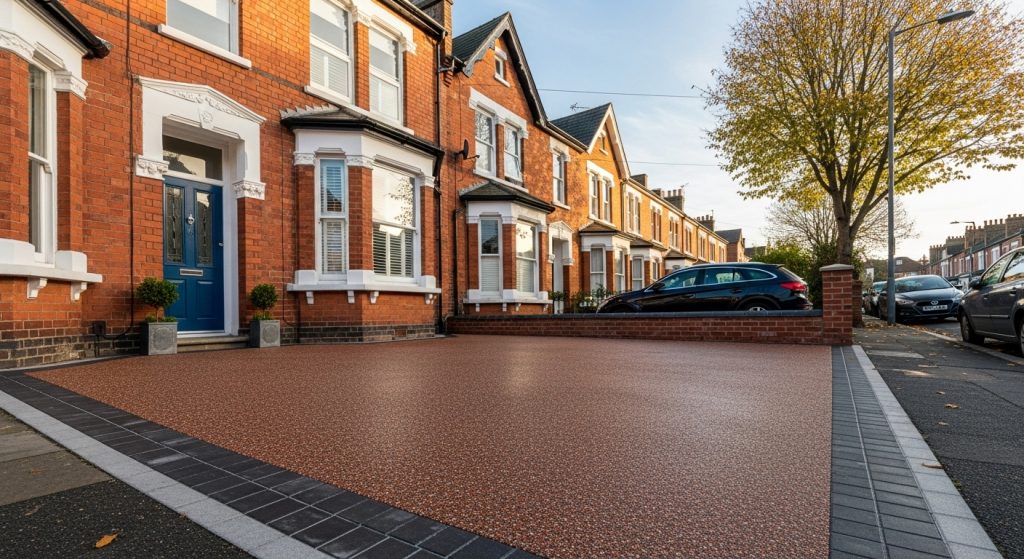
“We don’t start with a swatch; we start with your home. Brickwork, roof, windows, and landscaping inform the palette. The resin is there to complement, not compete.”
Ben Sperring, Surfacing & Civils Manager, Driveways Plus
Colour fundamentals: matching architecture, light, and landscape
A resin bound surface lives beside your brickwork and planting, so colour should be chosen in context.
Consider these five factors:
- Home’s exterior and brickwork
- Traditional homes (Georgian, Victorian, Cotswold cottages): look for natural colour palettes in gold, beige, and cream that contrast against traditional brickwork without shouting.
- Modern homes: grey resin tones (from light silver to dark grey) give a contemporary finish.
- Traditional homes (Georgian, Victorian, Cotswold cottages): look for natural colour palettes in gold, beige, and cream that contrast against traditional brickwork without shouting.
- Regional stone cues
- Bath Stone’s honey tones suit gold resin and soft creams.
- Cotswold stone pairs with beige and warm silver.
- Bristol’s mixed brick stock loves mid-to-dark grey with crisp edging.
- Bath Stone’s honey tones suit gold resin and soft creams.
- Light & orientation
- North-facing frontages benefit from lighter colours (Oyster Pearl, creams) to lift gloom.
- Sun-drenched drives can embrace darker colours (Anthracite) for definition.
- North-facing frontages benefit from lighter colours (Oyster Pearl, creams) to lift gloom.
- Maintenance reality
- Speckled, variegated mixes hide tyre marks better than a single colour.
- Lighter blends may show leaf tannins; regular cleaning keeps pores open.
- Speckled, variegated mixes hide tyre marks better than a single colour.
- Future design
- Think patios and paths: repeating your driveway tone across patios and paths creates a cohesive scheme.
- Think patios and paths: repeating your driveway tone across patios and paths creates a cohesive scheme.
Why UV stability matters
Always specify 100% Aliphatic, UV-stable polyurethane resin. Non‑UV (Aromatic) binders can yellow and embrittle, changing your chosen shade and shortening lifespan. Ask for the data sheet and ensure your contract states “UV‑stable” in writing.
The top 5 resin driveway colour blends for the South West
Based on hundreds of installations across Bath, Bristol, the Cotswolds, and the wider South West, these five combinations consistently deliver beautiful, long-lasting results.
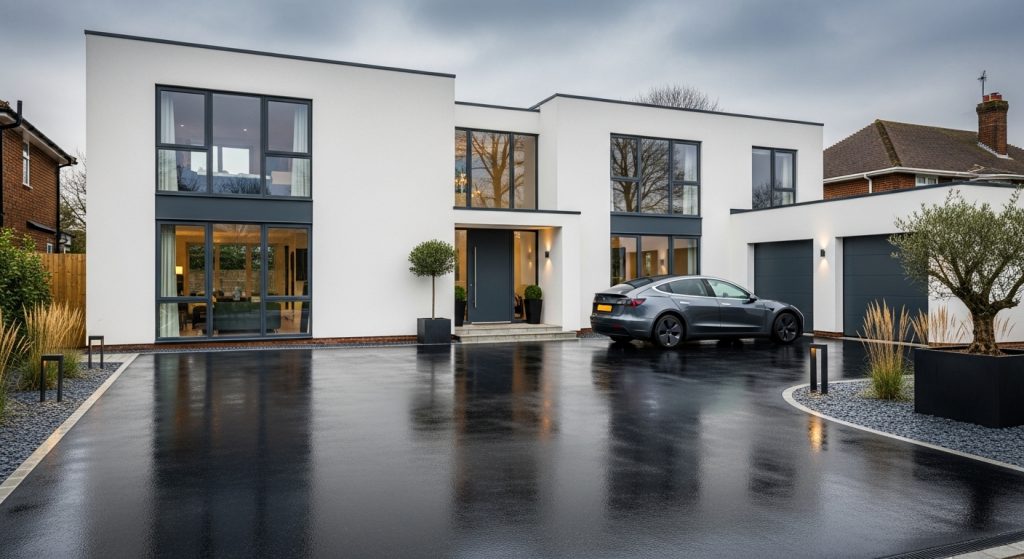
1. Sterling Silver / Silver Grey Granite
What it looks like: A contemporary blend of silver-grey, darker grey, and jet-black granite aggregates creating a clean, speckled finish.
Why it’s popular: This is the most versatile choice. It suits almost any property style, from Victorian terraces to new builds. The mid-to-dark tones hide dirt and tyre marks exceptionally well, keeping maintenance to a minimum.
Perfect for:
- Modern renovations and extensions
- Properties with grey or white render
- Contemporary new builds
- Creating sharp contrast against red Bristol brick
- Thames Valley executive homes
Not ideal for: Traditional honey-stone properties where it creates too much contrast.
Practical benefit: This blend’s dark tones mean it stays looking pristine with just occasional sweeping. It’s the choice for homeowners who want stunning aesthetics without high maintenance.
2. Golden Quartz / Natural Gold
What it looks like: Warm golden, honey, and mellow brown aggregates with a slightly softer texture from naturally rounded pebbles.
Why it’s popular: This is the quintessential choice for period properties. The warm palette feels natural, welcoming, and timeless. It brightens driveways and complements gardens beautifully.
Perfect for:
- Bath Stone Georgian and Victorian properties
- Cotswold stone cottages and farmhouses
- Rural settings across Somerset and Gloucestershire
- Traditional brick homes with warm tones
- Properties with established gardens and mature planting
Not ideal for: Ultra-modern architecture where warmer tones might soften the impact.
Practical benefit: Golden blends hide dust and light dirt remarkably well, maintaining their warm glow without constant cleaning.
3. Autumn Hues / Multi-tonal Blends
What it looks like: A rich fusion of reds, golds, ambers, browns, and sometimes green hints, creating a varied, earthy appearance.
Why it’s popular: The multi-tonal nature is incredibly forgiving. It disguises dirt, oil spots, and tyre marks better than any other option. Plus, it adds warmth and character to any property.
Perfect for:
- Red brick Victorian properties throughout Bristol and South Wales
- Traditional stone farmhouses
- Properties with varied brickwork colours
- Busy driveways with multiple vehicles
- Families wanting low-maintenance aesthetics
Not ideal for: Properties where a uniform, clean aesthetic is preferred.
Practical benefit: This is the most forgiving blend available. Leaf stains? Hardly noticeable. Tyre marks? They blend right in. It’s the busy family’s dream surface.
4. Oyster Pearl / Beige & Cream
What it looks like: Luxurious cream, beige, ivory, and subtle silver aggregates, often incorporating marble for a luminous, high-end appearance.
Perfect for:
- North-facing properties that need brightening
- Modern architecture with light render
- Coastal properties in Devon and Cornwall
- Properties with large, contemporary windows
- Creating stunning contrast with warm Bath Stone
Why it’s popular: It makes spaces feel larger, brighter, and more open. It’s the premium choice that photographs beautifully and adds genuine kerb appeal.
Not ideal for: High-traffic areas or properties with overhanging trees where frequent cleaning becomes necessary.
Practical benefit: Light colours reflect heat beautifully, staying cooler underfoot during summer. They also show off the quality of UV-stable resin – inferior resin will yellow these blends within months, making quality installers essential.
5. Anthracite / Dark Grey & Black
What it looks like: Bold, sophisticated blends of dark grey, charcoal, and jet-black aggregates. Some variations include subtle silver flecks for added interest.
Why it’s popular: This makes a statement. It’s the choice for homeowners who want dramatic, contemporary impact. It’s also exceptionally practical for hiding any marks or stains.
Perfect for:
- Modern architect-designed homes
- Contemporary renovations
- Commercial premises requiring professional impact
- Creating borders and contrast with lighter blends
- Urban Bristol and Thames Valley properties
Not ideal for: Traditional period properties where it might feel too harsh against heritage materials.
Practical benefit: Nothing hides imperfections like dark colours. This blend looks pristine with minimal maintenance, making it perfect for busy professionals.
How to match resin colours to your property’s architecture
Here’s the strategic approach that never fails: work with your property, not against it.
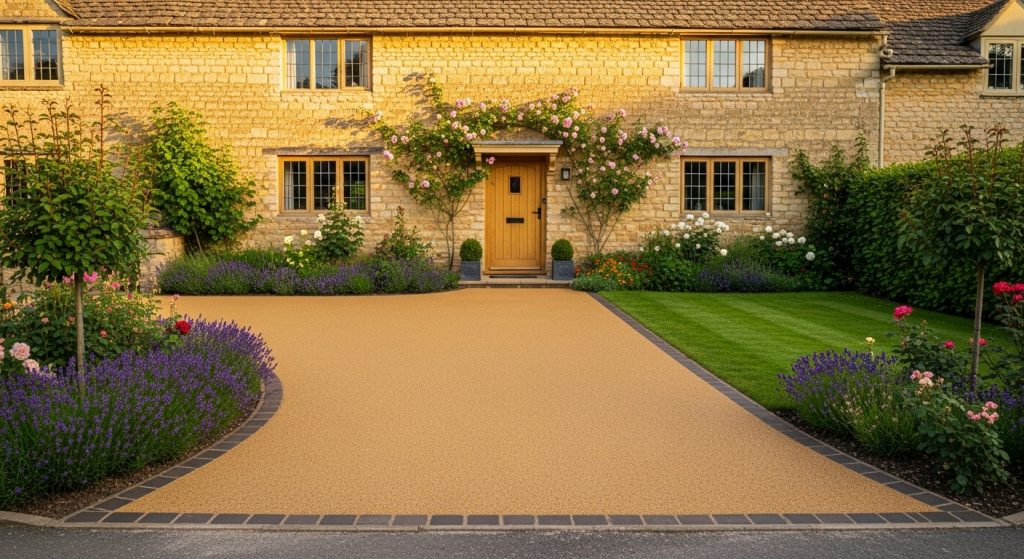
Your driveway should feel like a natural extension of your home. It should complement your brickwork, stonework, or render. It should enhance, not compete with, your architectural character.
For Bath Stone and Cotswold properties
The honey-coloured limestone of Bath and the Cotswolds is iconic. It’s warm, welcoming, and timeless. Your driveway needs to honour that palette.
Best choices:
- Golden quartz blends that echo those honey tones
- Warm beige and cream aggregates
- Multi-tonal autumn mixes with gold and brown notes
What to avoid: Cool greys and stark whites create jarring contrast rather than harmony.
A golden aggregate blend on a Bath Stone Georgian townhouse? That’s perfection. It respects the building’s heritage whilst adding a beautifully maintained, contemporary finish.
For Bristol’s Victorian and red brick properties
Bristol’s architectural character is diverse. Victorian terraces dominate many areas, built from warm red brick. Modern developments feature contemporary render. The historic harbourside showcases Pennant sandstone.
For red brick properties:
- Autumn blends with red, brown, and gold tones
- Multi-tonal mixes that pick up brick colours
- Warm brown and cappuccino shades
For modern architecture:
- Contemporary silver and grey blends
- Anthracite for bold, dramatic statements
- Clean creams for light, airy aesthetics
For Pennant sandstone areas:
- Silver-grey mixes that complement the stone
- Natural multi-tonal blends
For contemporary and modern builds
Modern properties give you freedom. Clean lines, large windows, and minimalist design pair beautifully with bold colour statements.
Consider:
- Anthracite and jet black for high-impact drama
- Sterling silver for sleek sophistication
- Oyster pearl for light, coastal vibes
These choices work because modern architecture can handle strong contrast. A black resin driveway against white render? Stunning. A silver blend framing glass and steel? Perfect.
Borders, bands, and patterns: small details, big impact
Clever detailing elevates even simple driveway ideas.
- Contrasting bands: Use a grey field with a black resin header band at the pavement edge to delineate the threshold and reduce tracking.
- Edging: Natural stone setts or slim metal edge restrains keep lines crisp and protect the resin bound surface.
- House numbers & motifs: Subtle inlays add character without visual clutter.
- Mixing tones: A light field with a darker apron is a timeless, modern and traditional homes friendly combo.
Practical spec tips (so your colour still looks perfect in 5 years)
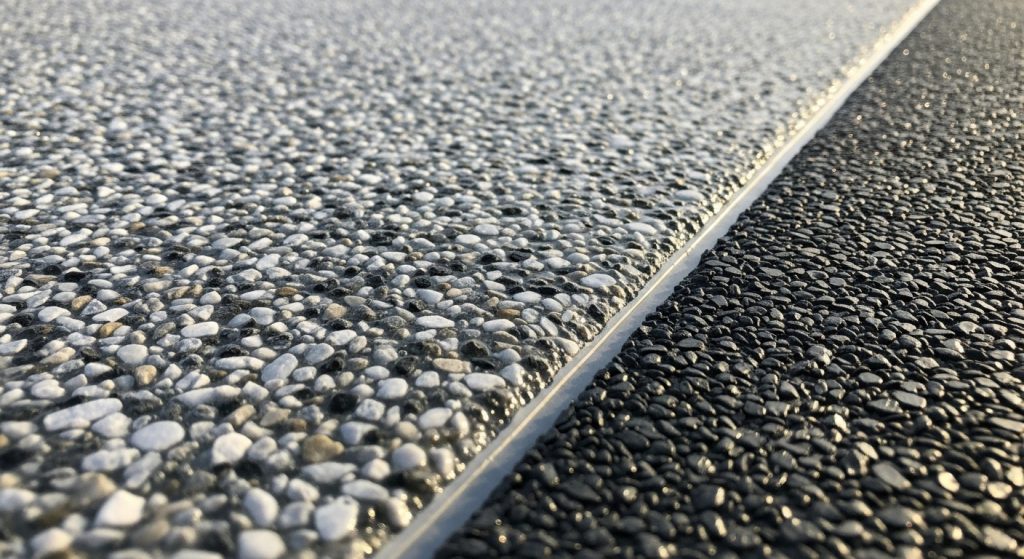
Depth & base: A resin bound driveway must be installed at the correct depth over a suitable base. For permeable systems, we specify open‑graded sub‑base and binder courses that keep your SuDS performance intact.
UV binder: Insist on premium resin that is UV‑stable. It’s non‑negotiable if you want true colour over time.
Cleaning: A straightforward maintenance routine — seasonal sweep and rinse — keeps pores open and colours bright.
Pro tip: Considering EV charging, gates, or lighting? We can integrate ducts and foundations at the driveway installation stage to avoid future disruption.
Local case study: Golden warmth on a Bath terrace (BA2)
- Brief: Create one off‑street space with a surface that “belongs” beside Bath Stone.
- Solution: Golden Quartz field with a charcoal sett contrasting colour border, set over a permeable base for on‑plot drainage.
- Outcome: A sympathetic finish that reads original to the street, with zero puddling and easy upkeep.
- Homeowner note: “It looks like it’s always been here — exactly what we wanted.”
Quick comparison table: colour families at a glance
Choosing between light, mid, and dark palettes for your resin bound paving.
Colour family | Typical blends | Best for | Visual effect | Maintenance notes |
Light | Oyster Pearl, light cream | Shaded plots, tight frontages | Feels larger and brighter | Shows leaf tannins sooner; gentle jet wash keeps it pristine |
Mid | Sterling Silver, warm beige | Most suburban homes | Balanced, versatile | Hides day‑to‑day marks well |
Dark | Anthracite, charcoal | Contemporary elevations | Strong frame, dramatic contrast | Can highlight dust in dry spells; looks superb with clipped planting |
Warm | Golden Quartz, Autumn Hues | Bath/Cotswolds stone | Harmonious, heritage‑friendly | Great at masking tyre scuffs |
FAQs: resin driveway colours & design
Do resin driveways fade over time?
With UV-stable aliphatic resin? No. The colour remains stable for 15-25 years. With non-UV-stable aromatic resin? Yes, dramatically and rapidly. Lighter colours yellow within months. This is why specifying UV-stable resin in your quote is absolutely critical. It’s the difference between a driveway that looks as good in 2040 as it does in 2025, and one that’s embarrassingly discoloured within two years.
Can you mix different resin colours in one driveway?
Yes, and the results can be stunning when done properly. The most effective approach is using a contrasting border colour to frame and define your main surface area. For example, an anthracite border around a golden centre adds sophisticated definition. Alternatively, some homeowners create custom patterns or even incorporate house numbers. But keep designs simple – one or two colours maximum for most residential properties. More than that risks looking busy rather than elegant.
How do I choose between warm and cool colours?
Multi-tonal autumn blends are the most forgiving. The varied mix of reds, golds, browns, and ambers disguises dirt, tyre marks, and leaf stains incredibly well. Single dark colours (anthracite, dark grey) are also excellent for hiding marks. Light colours – while beautiful – show dirt more readily and require more frequent cleaning to maintain that pristine appearance. If low maintenance is your priority, avoid cream and white blends.
What if my colour looks different after installation?
If your driveway was installed with UV-stable resin and quality aggregates, the colour should match your approved sample. Minor variations can occur due to natural stone differences, but dramatic colour shifts indicate problems. If significant yellowing appears within the first year, the installer almost certainly used non-UV-stable resin. This is why having “UV-stable aliphatic polyurethane resin” written explicitly in your contract is vital – it gives you legal recourse if problems develop.
Are some colours more expensive than others?
Generally, no. Most natural aggregate blends cost similarly. The main price factors are the quality of the resin (UV-stable costs more than non-UV), the installer’s skill level, and the complexity of your sub-base preparation. Some premium luxury aggregates (like marble blends) may carry a slight premium, but the difference is usually modest. Never accept a quote significantly cheaper than competitors without understanding what’s being compromised – it’s usually the resin quality.
Can I have a bespoke colour created?
Absolutely. Leading suppliers like DALTEX and The Resin Mill can create custom aggregate blends by mixing different stone types and colours. This allows you to achieve a truly unique finish that precisely matches or complements your property’s specific architectural details. Custom blends typically require slightly longer lead times and may cost a little more, but they offer complete design freedom for discerning homeowners.
Which colour hides dirt and marks best?
Multi-tonal autumn blends are the most forgiving. The varied mix of reds, golds, browns, and ambers disguises dirt, tyre marks, and leaf stains incredibly well. Single dark colours (anthracite, dark grey) are also excellent for hiding marks. Light colours – while beautiful – show dirt more readily and require more frequent cleaning to maintain that pristine appearance. If low maintenance is your priority, avoid cream and white blends.
Common colour selection mistakes (and how to avoid them)
Choosing purely on personal preference without considering your property
Your favourite colour might be navy blue. But if you have a warm honey-stone cottage, that preference needs to adapt. The most successful driveways work with architectural context, not against it.
The solution: Create a shortlist of colours you love, then assess which ones actually suit your property’s style and materials.
Ignoring practical maintenance realities
That pristine white blend looks incredible in the showroom. But you have three cars, two teenagers, and an oak tree overhanging your drive.
The solution: Be honest about your maintenance commitment. If you won’t clean regularly, choose darker or multi-tonal blends that hide marks.
Accepting the cheapest quote without checking resin specification
You’ve spent three weeks choosing between golden and silver aggregates. Then you accept a quote £40 per square metre cheaper than competitors without asking about UV-stable resin.
The solution: The resin type matters infinitely more than the aggregate colour. Never compromise on UV stability to save money.
Following trends rather than timeless choices
This year’s fashionable colour might be completely wrong for your 1920s semi-detached property.
The solution: Classic colours (golds, silvers, natural tones) remain beautiful for decades because they respect architectural heritage and natural surroundings.
Ben’s take: “Choosing the right colour for your resin driveway is half science, half taste. We’ll narrow it down quickly and show you life‑size samples on your plot so you can pick with confidence.”
Helpful links
Driveways Plus:
- Resin driveways – service overview: https://www.drivewaysplus.co.uk/resin-driveways/
- Our work – project gallery: https://www.drivewaysplus.co.uk/our-work/
- Contact – book your free design consultation: https://www.drivewaysplus.co.uk/contact/
External:
- UK guidance on permeable driveways & planning (SuDS): https://www.gov.uk/government/publications/national-standards-for-sustainable-drainage-systems/national-standards-for-sustainable-drainage-systems-suds
- British Board of Agrément (BBA) – product certification: https://www.bbacerts.co.uk/
Key takeaways
- Start with the house, not the swatch. Match stone, brick, and window tones.
- Use borders and bands to frame parking and add refinement.
- Specify UV‑stable (Aliphatic) resin to protect colour for the long term.
- Pick a palette that suits your upkeep — variegated mixes hide marks best.
- Think whole frontage — repeat the tone across paths and patios.
Ready to create a driveway that genuinely elevates your home?
Request your free design consultation and colour samples today. We’ll help you choose the right palette and design to create a driveway that looks incredible and performs for years.