Skip to content
The best gravel driveway options for homes across Bristol, Bath, and the Cotswolds are Cotswold Gravel, Golden Gravel, Silver Grey Granite, Welsh Slate, and Moonstone. Choose 14-20mm angular chippings held in stabilisation grids over a compacted MOT Type 1 sub-base with a weed-control membrane. This engineered build delivers a stable, low-maintenance, SuDS‑friendly driveway that looks smart for years.
Why gravel is still a brilliant choice for your driveway
Gravel driveways offer classic kerb appeal, natural drainage, reassuring crunch underfoot, and flexible styling at a sensible price. But a modern gravel drive is not just loose aggregate spread on soil. It’s an engineered system: sub‑base, membrane, cellular grid, and the right gravel size… all properly compacted. Get those layers right and you’ll enjoy a long‑lasting gravel driveway with far less raking and far more pride in how it looks.
Expert note (Tony Flook, Managing Director): “We build every gravel drive like we build roads, from the ground up. The grid system stops gravel from spreading and rutting, so you get the look you love without the hassle.”
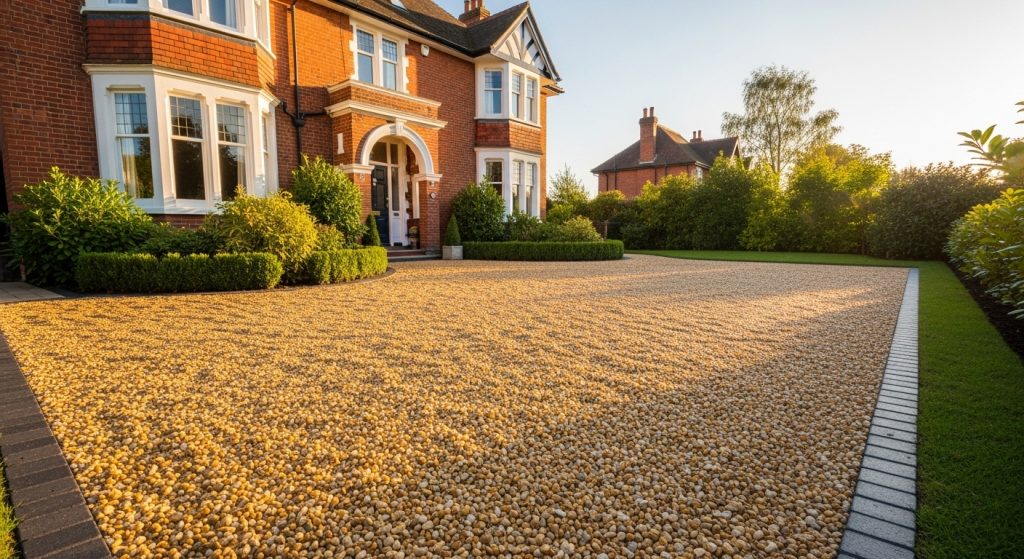
The build that makes or breaks a gravel drive
Beneath the gravel: the essential layers
- Sub-base (100-150mm MOT Type 1), compact to refusal to spread vehicle loads and stop sinking.
- Permeable geotextile membrane – provides weed control and stops the top aggregate mixing with the base.
- Stabilisation grids – interlocking honeycomb panels that hold the stones in place and prevent tyre scuff, even on slopes.
- Decorative layer (50-60mm), 14-20mm angular gravel or slate chippings compacted lightly so it knits.
The 14-20mm sweet spot
10mm looks fine on paths, but can lodge in tyre treads. For driveways, 14mm and 20mm are the proven winners – they settle, compact, and stay put.
Avoid: Pea gravel or any rounded, loose gravel on a drive. Rounded stones act like ball bearings and ruts appear fast.
The 5 best gravel types for driveways in 2025
Below are the five top performers for looks and longevity across the South West. For each gravel type, we explain the aesthetic, practicality, and where it sings.
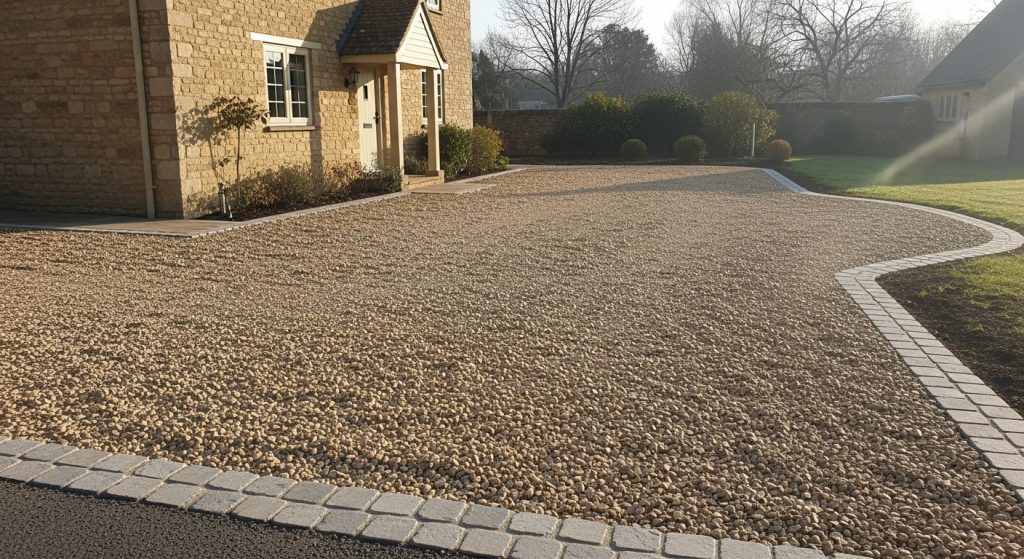
1) Cotswold Gravel (limestone) – the classic choice for driveways
Warm creamy‑buff tones that flatter Bath stone and Cotswold brickwork. An authentic, classic choice that feels bright and welcoming.
- Best for: Period homes, barn conversions, stone cottages around Bath, Bristol, Wiltshire, and Gloucestershire.
- Performance: Very good durability in domestic settings when installed with grids. Naturally permeable.
- Spec tip: Choose 20mm angular or 14mm for tighter knit. Consider self-binding gravel for paths and courtyards.
- Pair with: Natural stone driveway edging or granite setts for definition.
Ben Sperring, Surfacing & Civils Manager: “Cotswold over grids gives you country-house charm with city reliability. It stays even, drains well, and looks right on heritage façades.”
2) Golden Gravel (flint) – bright, friendly, and versatile
A cheerful blend of golds, tans, creams, and whites. A popular choice for driveways that lifts darker frontages.
- Best for: Victorian and Edwardian brick homes, coastal properties, and family homes wanting a warmer tone.
- Performance: Excellent strength thanks to hard flint.
- Spec tip: 20mm angular or mixed 14-20mm. Keep the finished layer to 50-60mm to avoid a loose feel.
- Pair with: Charcoal setts or steel edge for contrast.
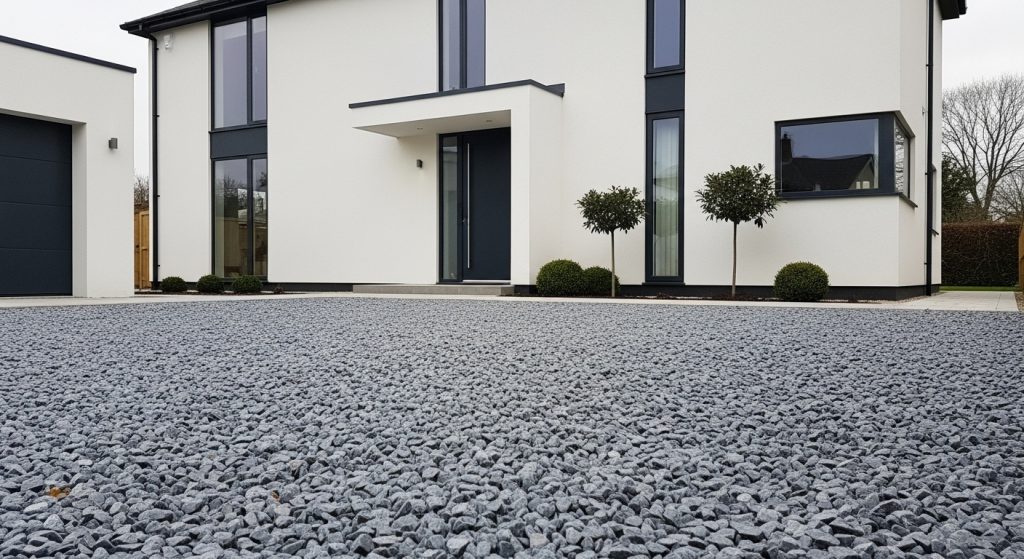
3) Silver Grey Granite (and basalt) – the modernist’s favourite
Crisp, cool, and very hard wearing. Gives a clean, architectural look that suits contemporary designs.
- Best for: Modern Bristol refurbs, minimalist new‑builds, and architect-led homes.
- Performance: Exceptional hardness; resists crushing and dusting.
- Spec tip: 20mm angular granite for drives; 10mm only for paths.
- Pair with: Aluminium or porcelain edges; charcoal or silver-grey setts.
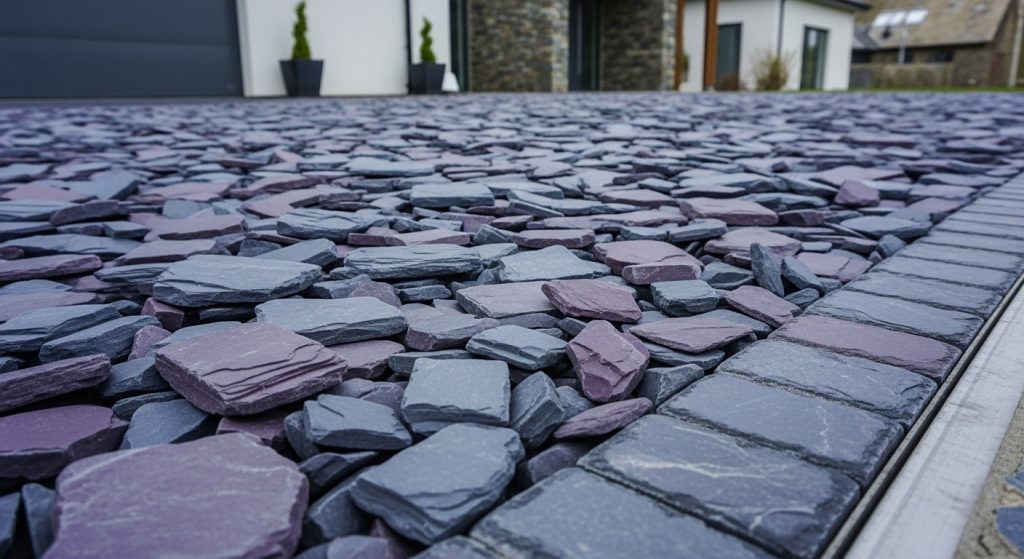
4) Welsh Slate chippings – bold texture with regional character
Layered, flat, angular slate pieces in blue‑grey, plum, or green. Dramatic and textural.
- Best for: Contemporary homes, South Wales and border counties, or to pick up slate roofs and local stone.
- Performance: Good on domestic drives with the right spec; use 40mm slate and grids to reduce chipping stress.
- Spec tip: Avoid small sizes on vehicle areas; go larger for strength and compact gently.
- Pair with: Simple steel edge or kerb for a crisp line.
5) Moonstone (flint blend) – smart monochrome, very low‑maintenance feel
A sophisticated mix of black, white, and grey flint that reads modern without feeling stark.
- Best for: Contemporary suburban homes across the Thames Valley and the South West.
- Performance: Excellent durability; hard flint holds its edge and colour.
- Spec tip: 20mm angular for the drive; consider a mixed 20-5mm blend for tighter binding in the grid.
- Pair with: Graphite kerbs, brushed steel lighting, and evergreen planting.
Quick comparison: which gravel is best for a driveway like yours?
Gravel type | Core look | Durability | Architectural fit | Ideal size for drives |
Cotswold (limestone) | Warm, rustic, brightens façades | Very good | Period stone, cottages, barn conversions | 14-20mm angular |
Golden Gravel (flint) | Welcoming, multi‑tonal | Excellent | Brick villas, family homes, coastal | 14-20mm angular |
Granite / Basalt | Clean, modern, high-contrast | Exceptional | Minimalist and architect-designed | 14-20mm angular |
Welsh Slate | Bold texture, regional | Good* | Modern homes, slate roofs | 40mm slate over grids* |
Moonstone (flint) | Sophisticated monochrome | Excellent | Contemporary suburban | 20mm angular |
*Use larger slate and a grid for vehicle areas.
Choosing the right gravel for your driveway (and getting the details right)
- Size matters: 20mm or 14mm for vehicle areas; 10mm gravel for paths only.
- Shape wins: Always angular gravel so stones interlock when you lightly compact them.
- Hardness helps: Flint, granite, and basalt shrug off wear; softer stones create fines over time.
- Depth & quantity: Aim to lay the gravel to a finished depth of 50-60mm. Wondering how much gravel that is? As a rule of thumb, 1 bulk bag covers about 10-12 m² at that depth.
- Edges that last: Proper driveway edging keeps loose aggregate tidy and protects planting. Steel, granite setts, or raised kerbs look sharp and stop gravel from mixing into borders.
- Maintenance: A monthly rake keeps things level. Top up every few years, depending on traffic. Treat weed growth at the edges quickly.
Regional design notes for Bristol, Bath, and the Cotswolds
- Bath & Cotswolds: Cotswold chippings echo local stone and feel authentic. Use Moonstone for a modern twist without clashing.
- Bristol: Silver Grey Granite suits crisp render and dark aluminium windows. Golden Gravel warms up urban brickwork nicely.
- South Wales fringe: Welsh Slate connects to local geology and looks superb against natural stone cladding.
Design tip: Match the driveway to the façade first, then the garden. The driveway will help frame the view of your home, so get the tone and texture working with your brick or stone.
What about SuDS, drainage, and planning?
A properly built gravel drive is naturally permeable. That usually means no planning permission for areas over 5 m², and excellent surface water control. We design falls and edge details so water drains evenly into the sub‑base. If you need extra drainage, we’ll advise on channels or soakaways as part of your new driveway design.
The legal and practical essentials
- SuDS compliance: In most cases, you won’t need planning permission if your driveway is permeable or directs runoff to a soakaway or lawn. This is set out by the UK Government’s SuDS guidance (GOV.UK).
- Proper build-up matters: Use a permeable sub-base such as MOT Type 3 or open-graded aggregate, overlaid with grids and angular gravel. This structure allows rainwater to percolate evenly through the surface.
- Drainage control: On sloping sites (like many in Bath), you’ll often need a threshold drain or shallow soakaway to capture excess runoff before it reaches the pavement. Local councils, such as Bath & North East Somerset Council, recommend this as part of SuDS best practice.
- Soil and site testing: In areas with clay or poor infiltration, a professional percolation test (BRE 365) determines whether additional measures, like attenuation crates or channel drains, are required.
Expert insight: “Even with a permeable surface, it’s good practice to manage heavy rainfall with subtle falls and channels. It keeps the system working efficiently year-round,” says Ben Sperring, Surfacing & Civils Manager.
If you’re unsure, consult your local council’s planning guidance or review national SuDS standards. Helpful overviews are available from the Susdrain knowledge base and from trusted UK installers experienced in permeable surfacing design.
Local project case study – Gravel Driveway Bath
Location: Near Bath
Brief: Replace rutted loose gravel with a premium look that stays put.
Spec: 130 m² Cotswold 20mm angular driveway gravel over MOT Type 1, geotextile, and 40 mm cellular gravel grids; granite sett entrance band; steel edge.
Outcome: Rock‑solid under turning, zero migration, and a brighter frontage that matched the honey stone. Homeowners now do a five‑minute rake once a month. “Total transformation.”
FAQs
What type of gravel is best for driveways?
A 14-20mm angular flint or granite is the best gravel for a driveway. It interlocks, avoids tyre treads pick‑up, and sits neatly in grids.
Is slate ok for a drive?
Yes, with the right spec. Use 40mm chippings, stabilisation grids, and a firm sub‑base. Better for light to moderate traffic.
How thick should the gravel layer be?
Install a layer of gravel to 50-60mm finished depth. Too deep feels unstable; too thin exposes the membrane.
How do I maintain a gravel driveway?
Occasional rake, edge trimming, and top‑up every few years. Grids minimise movement, so you’ll do less than with older builds.
Will weeds be a problem?
A quality membrane plus quick treatment at the edges handles weed control. Grids and correct depth help prevent germination.
Should I choose 10mm or 20mm gravel?
20mm angular gravel for drives; 10mm is better on paths. Using 20mm reduces carry‑out and clogging.
Key takeaways
- Choose 14-20mm angular gravel for a driveway; avoid rounded blends for vehicle areas.
- Build it like a road: MOT Type 1, membrane, stabilisation gravel grids, then 50-60mm decorative layer.
- Match colour to architecture: Cotswold for Bath stone, Granite for modern Bristol, Welsh Slate for regional character, Moonstone for crisp monochrome, Golden Gravel as a bright, classic choice.
- Finish with good driveway edging to prevent migration and keep a neat line.
- Aim for a low-maintenance setup: grids + the right-sized stones + monthly rake.
Ready to design your driveway?
We’ll help you choose the best specification, show you samples, and handle the details end‑to‑end. Book your free design consultation and see what’s possible for your property.
- Explore our Gravel Driveways service page.
- View recent installs in Our work.
- Or request your no‑obligation quote today.
P.S. Prefer resin or block paving? We deliver those too, and we’ll help you compare the pros and cons of gravel versus other types of driveway so you make the right call for your home.