Picture this: you’ve just spent thousands on a beautiful new driveway, only to receive an enforcement notice from your local council six months later. The installation doesn’t meet current drainage regulations, and you’re facing removal costs plus potential fines.
It happened to over 15,000 UK homeowners in 2025 alone[7].
The rules around SUDS compliant driveway UK installations aren’t just bureaucratic box-ticking. They’re designed to prevent flooding, protect our drainage infrastructure, and keep your property on the right side of planning law. With climate patterns shifting and heavier downpours becoming the norm, understanding these regulations isn’t optional anymore.
Whether you’re planning a complete driveway replacement or simply want to check if your existing surface meets current standards, this guide breaks down everything you need to know about SUDS compliance, permeable paving options, and the 2026 drainage regulations that govern UK driveways.
Key takeaways
- The 5m² rule remains law: Any impermeable driveway surface exceeding 5 square metres requires planning permission, whilst permeable materials avoid this requirement entirely
- Over 15,000 enforcement notices issued in 2025: Councils are actively enforcing SUDS regulations, with non-compliant driveways facing removal orders and fines
- Four material categories meet compliance: Resin-bound surfacing, permeable blocks, porous asphalt, and properly installed gravel all satisfy current SUDS requirements[1]
- Rainwater must stay on your property: All surface water must drain to permeable areas, soakaways, or harvesting systems within your boundary, never directly to roads or public drains[4]
- New 2025 standards introduce biodiversity requirements: Updated regulations now mandate consideration of amenity and ecological benefits alongside traditional drainage functionality
What makes a driveway SUDS compliant in the UK?
SUDS stands for Sustainable Urban Drainage Systems. It’s the framework that governs how rainwater is managed across all new developments and property improvements in the UK.
A SUDS compliant driveway UK installation does one simple thing: it allows rainwater to soak away naturally rather than overwhelming public drainage systems.
Think about traditional concrete or tarmac driveways. When it rains, water hits the surface and immediately runs off toward the street, carrying pollutants with it and adding pressure to already-strained sewers. During heavy downpours, this contributes directly to localised flooding.
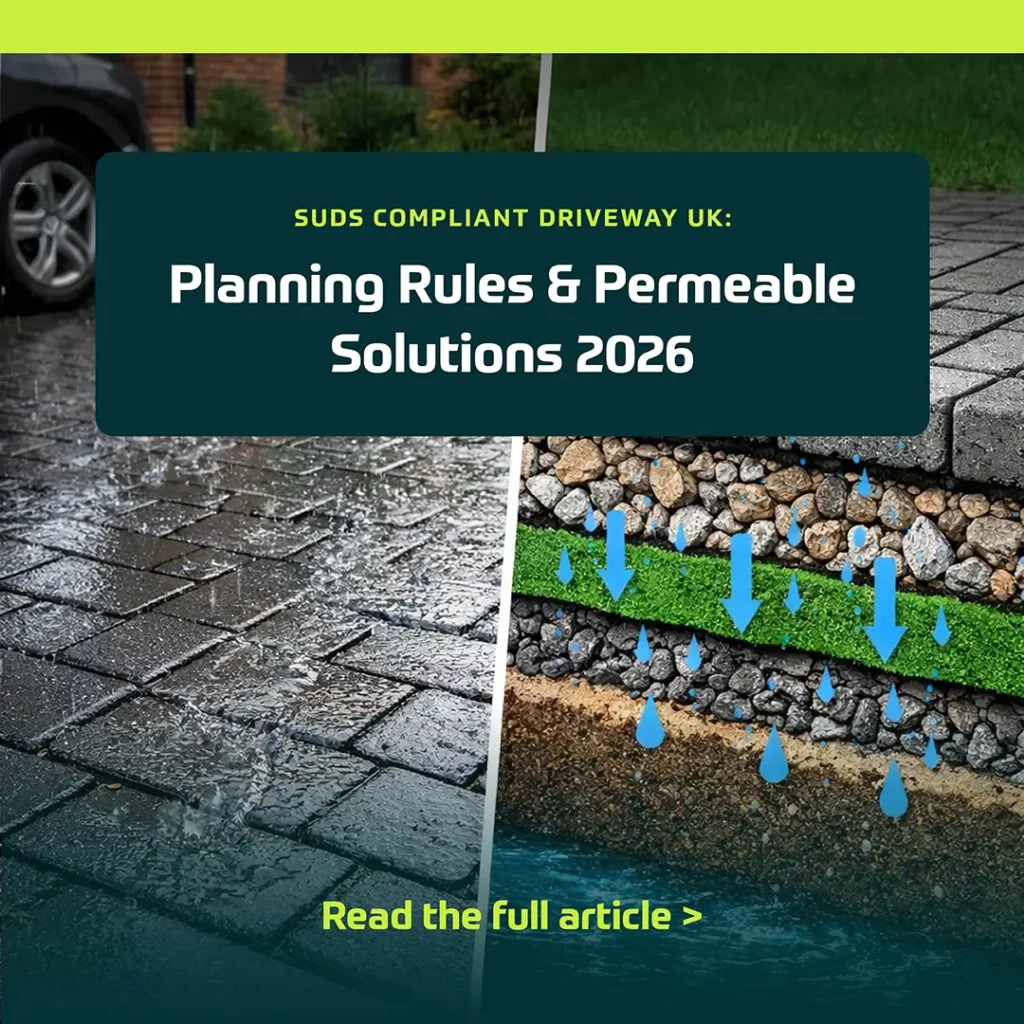
Permeable driveways work differently. They let water filter through the surface into layers of aggregate beneath, where it gradually soaks into the ground or gets directed to purpose-built soakaways[2].
🌧️ The four pillars of 2026 SUDS design
The updated National Standards for Sustainable Drainage Systems, published in June 2025, introduced significant changes to how drainage solutions must be designed. Your driveway now needs to address four core requirements[3]:
Water quantity control: Managing flood attenuation by capturing at least the first 5mm of rainfall on-site for the majority of rain events
Water quality management: Preventing pollutants from oil, tyre residue, and surface contaminants reaching natural watercourses
Amenity provision: Creating visually appealing solutions that enhance rather than detract from your property’s appearance
Biodiversity enhancement: Incorporating natural features where feasible to support local ecosystems
The last two pillars represent a fundamental shift in how regulators view drainage. It’s no longer just about shifting water away quickly; it’s about creating multifunctional solutions that benefit your property and the environment.
“The 2025 SUDS standards position drainage as an integrated design component rather than an afterthought. Homeowners who understand this early in their planning process end up with driveways that look better, perform better, and add genuine value to their properties.” – Tony Flook, Managing Director, Driveways Plus
✅ Does your existing driveway meet current standards?
If your driveway was installed before these regulations came into force, you’re not automatically required to upgrade. However, any replacement work or extension must comply with current rules.
Here’s the quick compliance check:
- Is your front driveway under 5 square metres? You’re exempt regardless of material
- Does water drain to a lawn, border, or soakaway within your property boundary? You’re likely compliant
- Is your driveway made from permeable materials like resin-bound surfacing or permeable blocks? You meet the standard
- Does rainwater run directly onto the pavement or road? You’re non-compliant and may face enforcement
The enforcement landscape has tightened considerably. Councils now actively investigate non-compliant installations, particularly in areas with known flooding issues[7].
Understanding the 5m² planning permission threshold
The “5 square metre rule” sits at the heart of UK driveway planning law. Get this wrong, and you’ll face delays, costs, and potential enforcement action.
Here’s how it works in practice.
📏 When you don’t need planning permission
You can proceed without planning permission if your new or replacement driveway meets specific criteria. The primary condition is permeability[7].
For surfaces exceeding 5 square metres, you’re exempt from planning permission only if:
- You use permeable surfacing that allows water to drain through it (resin-bound, permeable blocks, porous asphalt, or gravel)
- You direct rainwater to a lawn, border, or soakaway within your property boundary
- The work doesn’t affect a listed building or conservation area
If you choose traditional impermeable materials like standard concrete or tarmac and the area exceeds 5m², you must obtain planning permission. The application costs £262 and typically takes 8-12 weeks to process[7].
Most homeowners don’t realise how small 5 square metres actually is. It’s roughly equivalent to a 2.5m × 2m rectangle – barely enough space for a single car in many cases.
🚗 Calculating your driveway area accurately
Measuring seems straightforward, but many homeowners underestimate their actual surface area.
For rectangular driveways, multiply length by width. Simple enough.
For irregular shapes, break the area into rectangles and triangles, calculate each section separately, then add them together. Alternatively, use a digital measuring tool or ask your installer to provide accurate measurements during the quotation process.
“We see homeowners miscalculate their driveway area regularly. They’ll measure the main parking section but forget to include the turning area or the section leading to their garage. Those extra metres push them over the 5m² threshold, and suddenly they need planning permission they hadn’t budgeted for.” – Ben Sperring, Surfacing Manager, Driveways Plus
Remember that the 5m² threshold applies to the total impermeable area at the front of your property, not just the driveway itself. If you’ve already got 3m² of impermeable patio and you’re adding a 3m² driveway section, you’ve exceeded the limit.
🏛️ The planning permission process for impermeable surfaces
If you’ve decided on an impermeable material and your area exceeds 5m², here’s what the planning permission process involves:
Application submission: Complete the householder planning application form through your local council’s planning portal, including detailed drawings showing drainage provisions
Fee payment: The standard fee is £262 for householder applications in England
Neighbour consultation: Your council will notify adjacent properties and allow them to comment
Decision timeline: Most applications receive a decision within 8 weeks, though complex cases can take up to 12 weeks
Conditions: If approved, your permission will include specific conditions about drainage systems, materials, and installation standards
The approval isn’t guaranteed. Councils can refuse applications if they believe the drainage solution is inadequate or if the proposal conflicts with local planning policies.
For most homeowners, the simpler route is choosing a SUDS-compliant permeable material from the outset. You’ll avoid the application fee, the waiting period, and the risk of refusal entirely.
SUDS-compliant driveway materials: your options explained
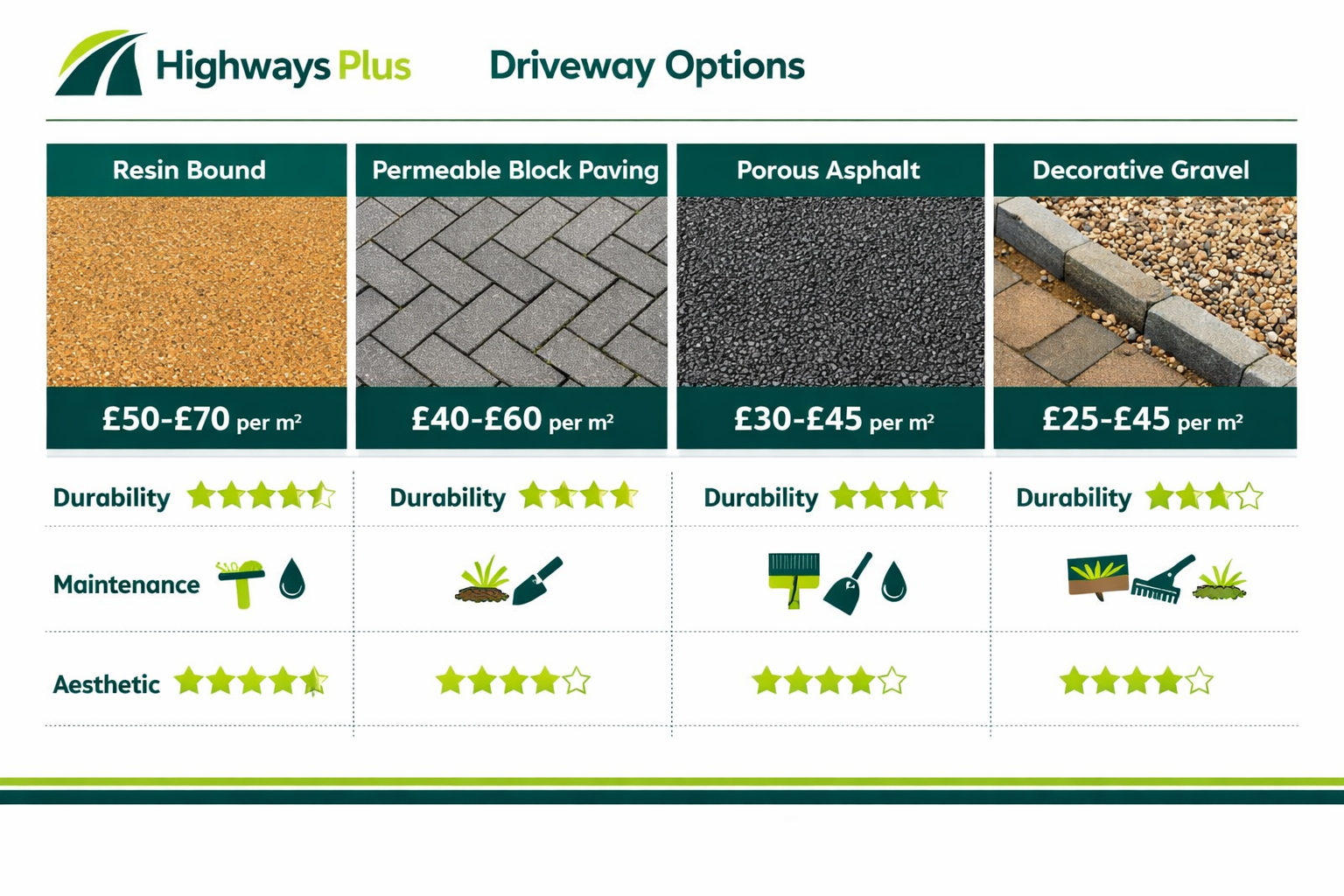
Not all permeable surfaces are created equal. Each material offers different benefits, costs, and aesthetic possibilities.
Let’s break down your options for a fully compliant installation.
🔷 Resin-bound surfacing
Resin-bound driveways have surged in popularity over the past five years, and for good reason. They combine SUDS compliance with exceptional visual appeal.
The surface consists of natural aggregate stones fully coated in clear resin, then trowelled smooth to create a flat, permeable finish. Water drains through tiny gaps between the stones into the sub-base beneath[1].
Key benefits:
- Fully SUDS compliant regardless of size
- Wide range of aggregate colours and blends available
- Smooth, comfortable surface for walking and wheelchair access
- Low maintenance requirements
- Resistant to weed growth
- Typically lasts 15-20 years with proper installation
Considerations:
- Higher upfront cost compared to basic block paving
- Requires professional installation for proper permeability
- UV exposure can cause slight colour fade over time
- Not suitable for areas with heavy vehicle traffic like commercial yards
We’ve covered the aesthetic possibilities in detail in our guide to resin driveway colours for UK homes.
🧱 Permeable block paving
Block paving remains the most popular choice for UK driveways, and permeable variants offer excellent SUDS compliance whilst maintaining the classic look.
Unlike standard block paving with tight joints, permeable blocks feature wider gaps (typically 6-10mm) filled with kiln-dried jointing sand. Water drains through these gaps into the aggregate sub-base[2].
Key benefits:
- Proven durability with 25+ year lifespan
- Individual blocks can be replaced if damaged
- Wide variety of colours, patterns, and styles
- Excellent load-bearing capacity for heavy vehicles
- Familiar appearance that suits traditional and modern properties
- Generally more affordable than resin-bound options
Considerations:
- Joints require occasional topping up with kiln-dried sand
- Weeds can occasionally establish in joints
- Requires proper edge restraints to prevent block movement
- Installation quality significantly affects long-term performance
Our block paving advice section provides detailed guidance on patterns, maintenance, and design possibilities.
⚫ Porous asphalt
Porous asphalt (also called permeable tarmac) offers a modern take on traditional tarmac surfacing. The mix contains larger aggregate with reduced fine particles, creating voids that allow water penetration[8].
Key benefits:
- Familiar black or red oxide appearance
- Quick installation process
- Suitable for sloped driveways
- Good for high-traffic areas
- Cost-effective for larger areas
- Fully SUDS compliant
Considerations:
- Can become clogged over time if not maintained
- Requires periodic pressure washing to maintain permeability
- Limited colour options compared to resin or blocks
- Surface texture may be too coarse for some preferences
For more details on modern tarmac options, see our complete guide to the best tarmac for driveways.
🪨 Gravel and crushed stone
Gravel represents the most affordable SUDS-compliant option. When properly installed with edging restraints and a geotextile membrane, loose gravel provides excellent drainage whilst creating an attractive, traditional finish[1].
Key benefits:
- Lowest material cost
- Excellent drainage performance
- Natural, cottage-garden aesthetic
- Easy to repair or top up
- Provides audible security (crunches underfoot)
- Suitable for curved or irregular shapes
Considerations:
- Requires regular raking and topping up
- Can migrate onto lawns and paths
- Not ideal for sloped driveways
- Uncomfortable for wheelchairs and pushchairs
- Can be displaced by snow clearing
Our gravel driveway options guide explores different stone types, colours, and installation methods in detail.
“The material you choose should match your property’s character and your practical needs. A Victorian terrace might suit traditional block paving, whilst a contemporary new-build could look stunning with resin-bound in a modern colour blend. Both can be fully SUDS compliant – it’s about finding the right fit for your home.” – Mike Clancy, Non-Executive Director, Driveways Plus
Installation requirements and drainage systems
Choosing a SUDS-compliant material is only half the battle. Proper installation determines whether your driveway actually performs as intended.
🏗️ The critical importance of sub-base preparation
The layers beneath your visible surface do the real work in a permeable driveway system.
A typical SUDS-compliant installation includes:
Geotextile membrane: Laid directly on the excavated subsoil to prevent fine particles migrating upward and clogging the system
Sub-base aggregate: Usually 150-200mm of clean, angular stone (typically Type 3 or similar) that provides structural support whilst allowing water infiltration
Bedding layer: A 30-50mm layer of smaller aggregate that creates a stable base for your chosen surface material
Surface material: Your resin-bound, permeable blocks, porous asphalt, or gravel finish
Each layer must be properly compacted using a vibrating plate compactor. Inadequate compaction leads to settlement, surface deformation, and eventual failure of the drainage function[2].
“I’ve seen countless DIY installations and budget contractor jobs that look fine initially but fail within two years because the sub-base wasn’t properly prepared. You can’t see the layers beneath the surface, but they’re what determines whether your driveway lasts 5 years or 25 years.” – Ben Sperring, Surfacing Manager, Driveways Plus
💧 Soakaway systems and rainwater harvesting
Even with a permeable surface, you may need additional drainage infrastructure depending on your soil type and local water table.
Soakaways are underground chambers or pits filled with rubble or purpose-built crates that temporarily store water before it gradually infiltrates the surrounding soil. They’re essential if your subsoil has poor drainage characteristics[4].
A properly sized soakaway for a typical domestic driveway should be:
- Located at least 5 metres from any building foundation
- Positioned downslope from the driveway
- Sized to accommodate the volume of water from your driveway area
- Wrapped in geotextile membrane to prevent siltation
Rainwater harvesting has emerged as a frontline compliance method under the 2025 SUDS standards. These systems capture initial rainfall from smaller, more frequent rain events, storing it for later use in garden irrigation or toilet flushing[3].
For driveways, a basic harvesting system might include:
- Permeable surface allowing initial infiltration
- Overflow connection to an underground storage tank
- Simple pump system for reuse
- Overflow to soakaway for excess capacity
The updated regulations explicitly recognise rainwater harvesting as a primary compliance solution, particularly for properties where traditional soakaways aren’t feasible due to high water tables or clay soils.
📐 Gradient and fall requirements
Water won’t drain properly if your driveway is completely flat. Proper gradient design is essential for SUDS performance.
Minimum fall requirements:
- Permeable surfaces: 1:80 gradient (1.25%) minimum to encourage surface water movement toward drainage areas
- Impermeable surfaces with drainage channels: 1:60 gradient (1.67%) minimum
- Maximum gradient: 1:12 (8.3%) before additional grip measures become necessary
For steep driveway installations, additional considerations apply. You’ll need proper surface texturing for vehicle grip, potentially stepped sections, and carefully designed drainage to prevent water rushing down the slope during heavy rain.
The fall should direct water away from your property and toward designated drainage areas – never toward your house foundation or neighbouring properties.
🔍 Common installation mistakes to avoid
Even professional installers occasionally get these wrong. Watch out for:
Inadequate excavation depth: Trying to save money by reducing sub-base thickness compromises both structural integrity and drainage capacity
Using the wrong aggregate: Builder’s sand or fine materials in the sub-base will clog and prevent drainage
Poor edge restraints: Without solid edging, permeable blocks will gradually spread and the surface will fail
Ignoring existing drainage: Your new driveway must work with existing site drainage patterns, not against them
Insufficient compaction: Each layer needs proper compaction; skipping this step guarantees future problems
No geotextile membrane: This critical layer prevents the system from clogging over time
If you’re tackling a driveway project yourself, our practical how-to guides cover installation techniques in detail. However, for guaranteed SUDS compliance and long-term performance, professional installation is worth the investment.
Maintaining your SUDS compliant driveway
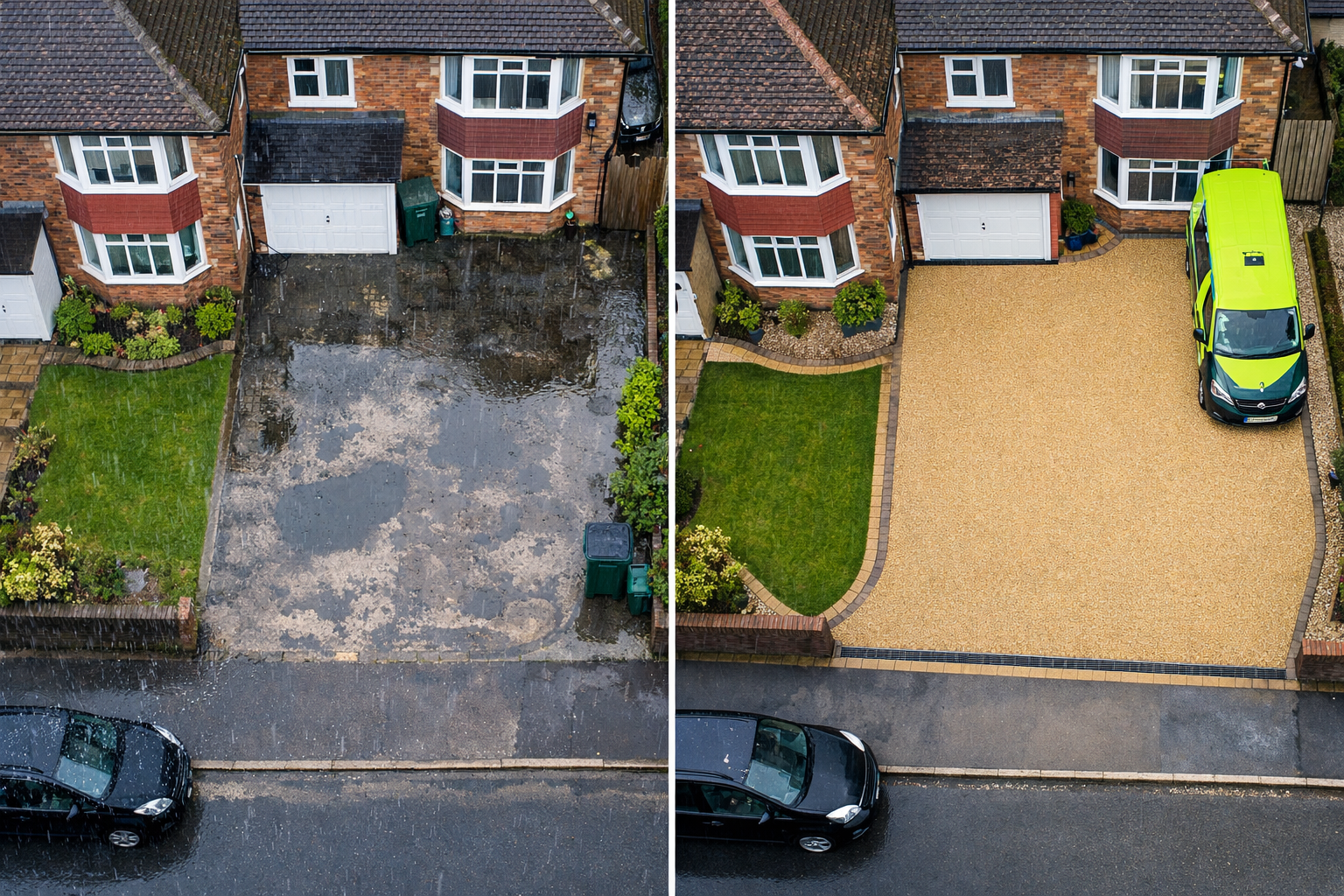
A permeable driveway isn’t fit-and-forget. Proper maintenance preserves both its appearance and its drainage function.
🧹 Regular cleaning and permeability maintenance
The biggest threat to permeable driveways is gradual clogging from fine particles, organic matter, and debris.
Monthly maintenance:
- Sweep or blow away leaves, dirt, and debris
- Check that drainage joints or pores remain clear
- Remove any weed growth promptly
Annual deep cleaning:
- Pressure wash the surface to clear accumulated fine particles
- For resin-bound surfaces, use medium pressure to avoid damage
- For permeable blocks, consider professional joint cleaning
- Vacuum or blow out loosened debris after washing
Every 2-3 years:
- Top up jointing sand in permeable block paving
- Check and clear soakaway inspection chambers
- Verify that water still infiltrates properly after heavy rain
Oil and fuel spills need immediate attention. They can clog permeable surfaces and prevent proper drainage. Our guide on removing oil stains from driveways provides specific techniques for different surface types.
❄️ Winter care and seasonal considerations
UK winters present specific challenges for permeable driveways.
De-icing: Avoid salt-based de-icers on resin-bound surfaces as they can damage the resin binder. Use sand or specialist resin-safe products instead.
Snow clearing: Use plastic shovels rather than metal to prevent surface damage. The permeable nature of these driveways actually helps – water from melting snow drains away rather than refreezing into dangerous ice patches.
Leaf management: Autumn leaf fall can quickly clog permeable surfaces if left to decompose. Regular sweeping during autumn prevents this issue.
🔧 Addressing common problems
Even well-installed SUDS driveways can develop issues over time. Here’s how to address them:
Reduced drainage performance: Usually caused by surface clogging. Thorough pressure washing typically resolves this. If problems persist, the sub-base may be compromised and require professional assessment.
Surface staining: Organic stains from leaves or algae respond well to specialist patio cleaners. Avoid bleach, which can damage resin and discolour aggregate.
Block movement: In permeable paving, individual blocks can settle or shift. Replace and re-bed affected blocks promptly to prevent the problem spreading.
Weed growth: More common in block paving joints. Remove weeds manually or use targeted weed killer, then top up joints with fresh kiln-dried sand.
Our article on common driveway problems and permanent fixes covers these issues in greater depth.
“Homeowners often ask how much maintenance a permeable driveway needs compared to traditional surfaces. Honestly, it’s about the same – a good sweep monthly and a pressure wash annually. The difference is that with permeable surfaces, that maintenance directly protects your investment by preserving the drainage function that keeps you compliant with regulations.” – Tony Flook, Managing Director, Driveways Plus
📊 Performance monitoring
Keep an eye on how your driveway performs during heavy rain. Water should infiltrate within minutes rather than pooling on the surface.
If you notice:
- Standing water that persists for hours after rain
- Water running off onto the pavement
- Puddles forming in specific areas
- Visible surface deterioration
…then it’s time for professional assessment. These symptoms suggest either maintenance needs or underlying installation issues that require attention.
Frequently asked questions
Do I need planning permission for a resin driveway in the UK?
No, you don’t need planning permission for a resin-bound driveway regardless of size, as it’s fully permeable and meets SUDS requirements[1]. However, if you’re installing it at a listed property or in a conservation area, you should check with your local planning authority first. Resin-bonded driveways (where stones are scattered on top of resin rather than mixed through) may not be permeable and could require permission if over 5m².
Can I make my existing concrete driveway SUDS compliant?
Converting an existing impermeable concrete driveway to SUDS compliance is challenging. Your options include: installing a permeable overlay system (specialist porous surfaces applied over existing concrete), removing sections and replacing with permeable materials, or installing comprehensive drainage channels and soakaways to manage runoff. Complete removal and replacement with permeable materials typically provides the most reliable long-term solution, though it’s more expensive initially.
How long does a SUDS compliant driveway last?
Lifespan varies by material: resin-bound surfaces typically last 15-20 years, permeable block paving 25+ years, and porous asphalt 15-20 years with proper maintenance[2]. The key factor isn’t the material itself but the quality of sub-base preparation and installation. A professionally installed permeable driveway with proper maintenance will outlast a poorly installed traditional surface every time.
What happens if my driveway doesn’t meet SUDS regulations?
If your local authority identifies a non-compliant driveway, they can issue an enforcement notice requiring you to either apply for retrospective planning permission or remove the non-compliant surface[7]. You’ll typically receive a formal notice giving you time to rectify the situation. Ignoring enforcement notices can lead to prosecution and fines. The simplest solution is ensuring compliance from the outset by choosing permeable materials or installing proper drainage systems.
Are SUDS driveways more expensive than traditional options?
Initial costs for SUDS-compliant materials can be 10-30% higher than basic impermeable alternatives, but this doesn’t account for the full picture. When you factor in planning permission fees (£262), potential enforcement costs, and the long-term value of proper drainage, compliant solutions often prove more cost-effective. Additionally, permeable driveways can add value to your property and reduce insurance premiums in flood-risk areas. The investment protects both your property and your legal position.
Can I install a SUDS compliant driveway myself?
Technically yes, but professional installation is strongly recommended. Achieving proper SUDS compliance requires correct sub-base preparation, appropriate gradients, proper compaction, and understanding of drainage principles[2]. DIY installations often fail permeability tests or develop structural problems within a few years. If you’re determined to DIY, focus on simpler options like gravel, and invest in professional advice for the design and drainage aspects at minimum.
Conclusion
SUDS compliant driveway UK regulations aren’t going away. If anything, enforcement will continue tightening as climate change brings more intense rainfall events and flooding concerns intensify.
The good news? Compliance doesn’t mean compromising on appearance or functionality.
Modern permeable materials offer stunning visual possibilities, from the smooth elegance of resin-bound surfacing to the classic appeal of permeable block paving. They perform brilliantly in UK weather conditions, often outlasting traditional impermeable alternatives whilst keeping you firmly on the right side of planning law.
The key decisions come down to:
Material selection: Choose something that suits your property’s character, your budget, and your practical needs. All the SUDS-compliant options we’ve covered can look fantastic when properly specified and installed.
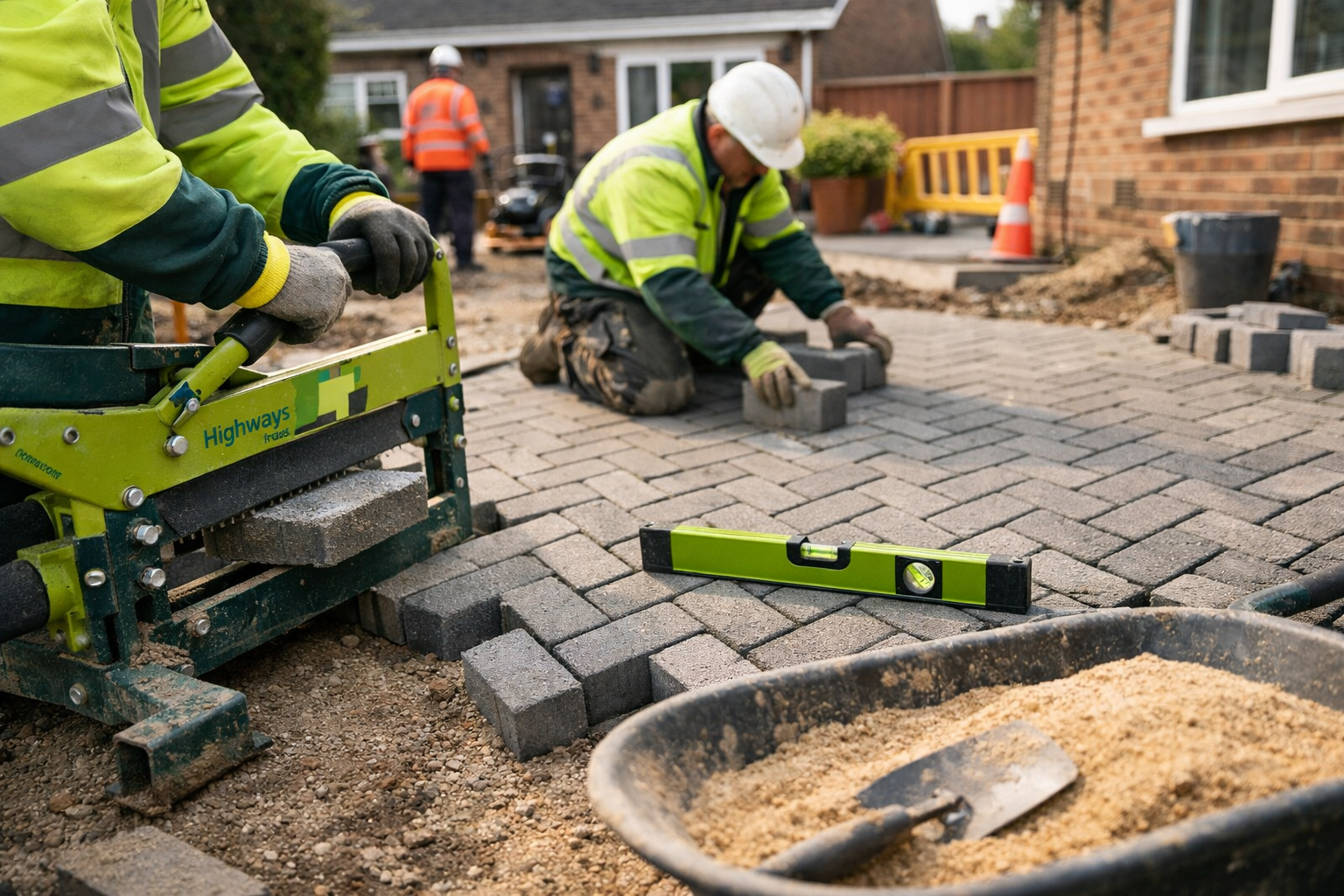
Professional installation: This isn’t where you want to cut corners. Proper sub-base preparation, correct gradients, and quality workmanship determine whether your driveway lasts 5 years or 25 years.
Ongoing maintenance: A permeable driveway needs regular care to maintain its drainage function. Factor this into your decision-making from the start.
If you’re planning a new driveway installation, start by getting professional advice on your specific site conditions. Soil type, existing drainage, gradient, and local water table all influence which solution works best for your property.
At Driveways Plus, we’ve been installing SUDS-compliant driveways across the South West for over 25 years. We understand the regulations inside out, and more importantly, we know how to create beautiful, functional driveways that enhance your property whilst meeting every compliance requirement.
Ready to explore your options? Get in touch for a free consultation and quote. We’ll assess your property, explain which materials would work best for your situation, and provide a detailed quotation with no obligation.
Your driveway should be an asset, not a liability. Let’s make sure it’s both beautiful and compliant.
References
[1] Blog Post –
[2] Uk Driveway Drainage Explained Suds Compliance Permeable Surfaces How To Avoid Costly Mistakes –
[3] Suds Compliance Guide Driveways Patios –
[4] Understanding Driveway Drainage Regulations –
[5] 5 Signs Your – https://www.sureset.co.uk/blog/5-signs-your-
[6] Block Paving Trends 2026 –
[7] New Driveway Rule Change 2026 –
[8] The Complete Guide To Permeable Driveway Solutions For Uk Weather –